Introduction
AI image generation starts with a simple idea but the real results depend on how clearly that idea is communicated. This communication happens through prompts. Many beginners assume prompts are just commands, but in reality they work more like guidance notes for the AI.
When I first started, I thought prompts were like Google searches – the more keywords, the better. I’d stuff every related word into my prompts and wonder why the results were chaotic. It took me months to realize that prompts are about guiding, not commanding.
I have spent years experimenting with AI image generation across different tools and workflows. Through real testing, I learned that prompts are not about writing long or fancy text. They are about clarity, intent, and understanding how AI interprets language. This article explains the role of prompts in a practical way so readers can move beyond guesswork and start getting predictable results.
If you are new to this topic, you may want to first explore the AI Image Generation Guide , which explains the full system before diving deeper into prompts.
What Are AI Image Prompts?
An AI image prompt is a text description that tells the AI what kind of image to generate. It does not act like a strict instruction. Instead, it gives the model context and direction.
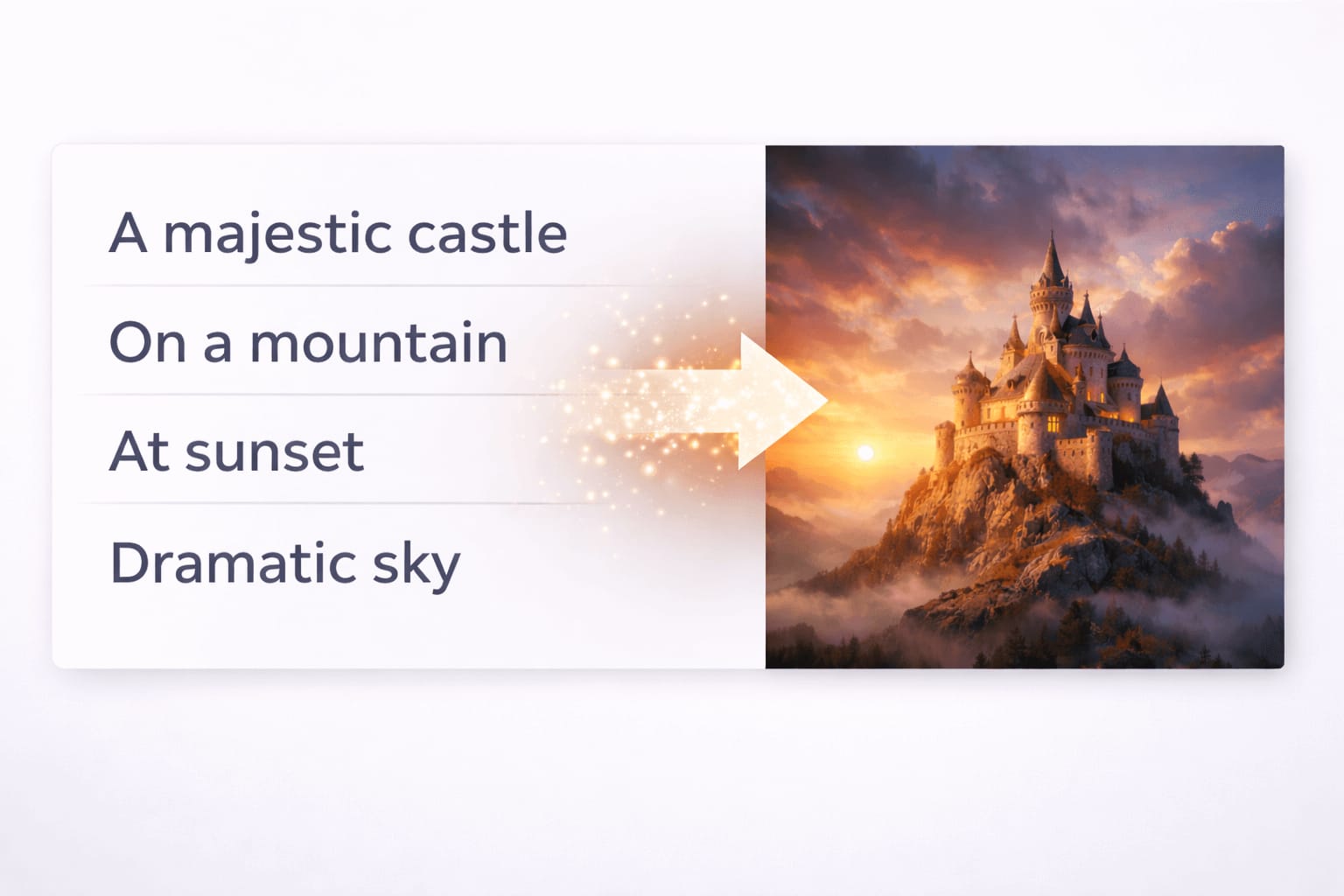
The AI reads your prompt, breaks it into concepts, and then tries to visually represent those ideas based on its training. Words like subject, environment, lighting, mood, and style all influence the final image.
A prompt is not magic text. It is simply a way to reduce confusion for the model. When I stopped treating prompts as spells and started treating them as descriptions, my results became much more predictable.
How Prompts Guide the AI Model
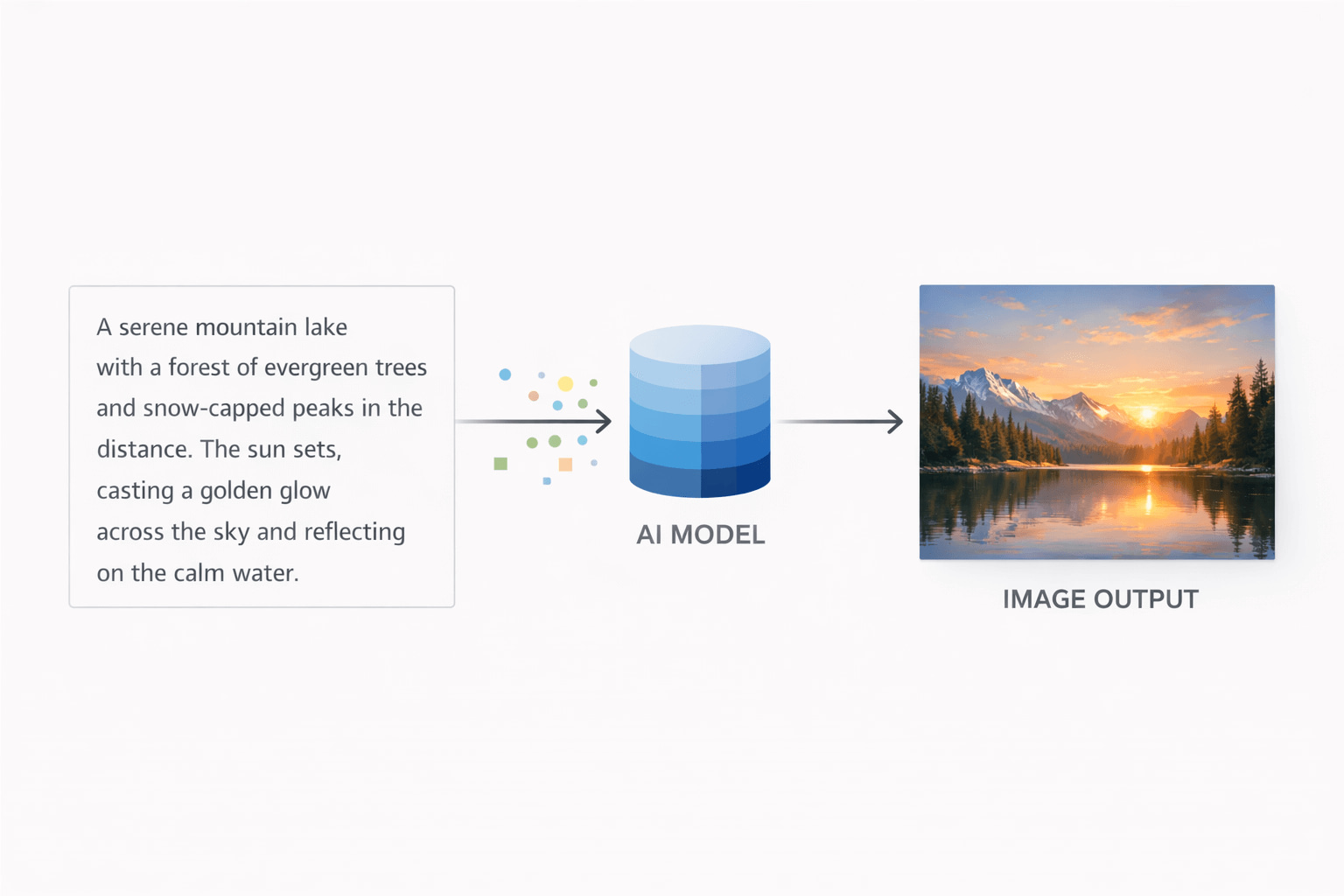
AI models do not understand images the way humans do. They understand patterns. When you write a prompt, the model searches its learned data for similar patterns and tries to assemble a new image based on probability.
Clear prompts reduce ambiguity. Vague prompts increase randomness.
For example, describing a “person” gives very little guidance. Adding age range, environment, and mood gives the model more structure to work with. The goal is not control, but alignment.
To understand how different tools interpret prompts differently, my guide on [Midjourney vs Leonardo vs Stable Diffusion] explains these variations in detail.
Practical Examples
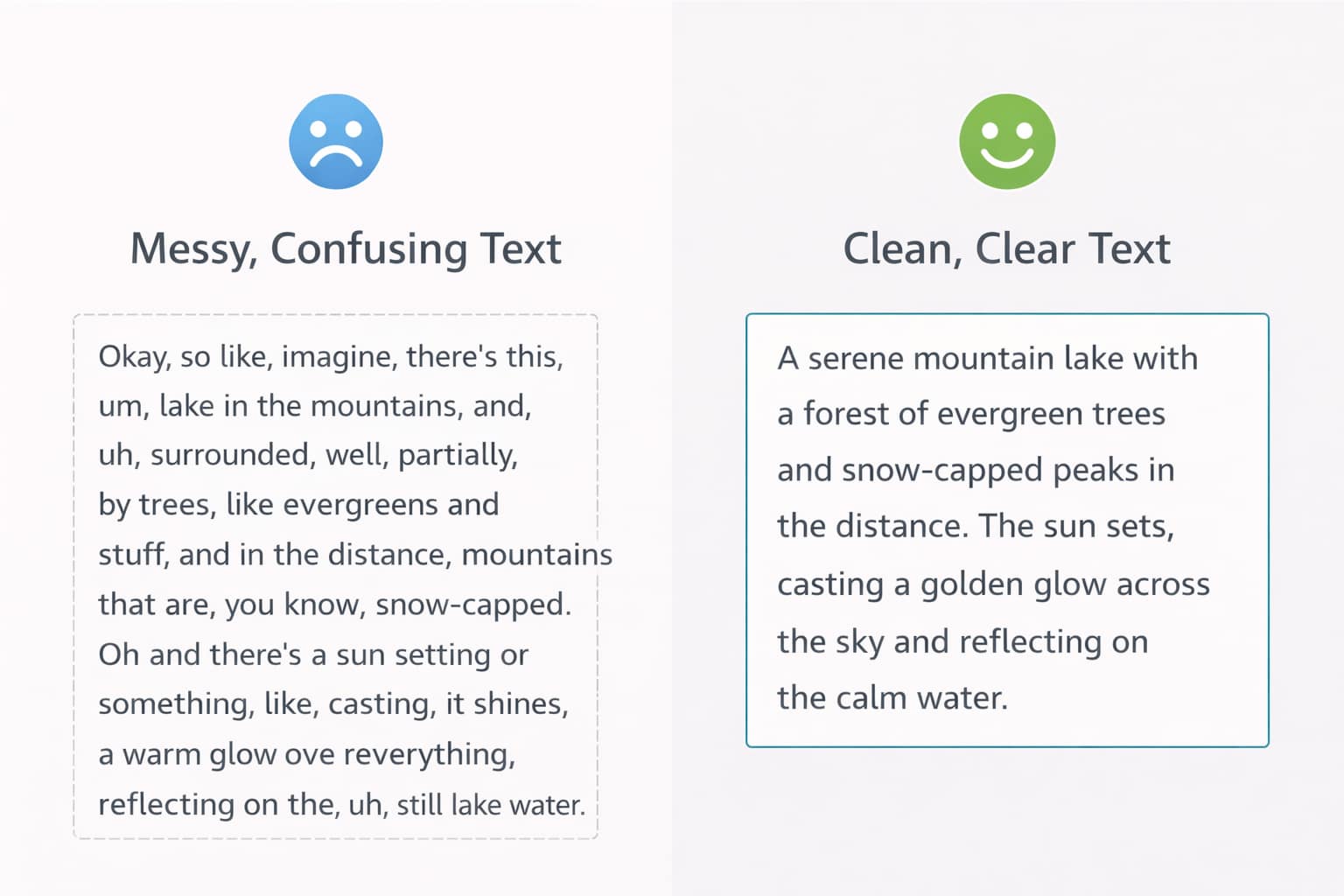
Consider these two approaches:
A short and unclear description often leads to generic results because the AI has too many possible interpretations.
A clearer description that mentions the subject, setting, and visual mood helps the model make better decisions about composition, lighting, and detail.
You do not need long prompts. You need intentional prompts. I’ve had better results with 15 well-chosen words than with 50 random ones.
For those focused on achieving photorealistic results, my guide on [Leonardo AI for Realistic Images] demonstrates how intentional prompting makes all the difference.
Common Mistakes Beginners Make With Prompts
Many users struggle not because the tool is bad, but because the prompt is poorly designed. I made every mistake on this list.
Prompt overload – Adding too many styles, effects, or conflicting ideas confuses the model.
Mixing realism with illustration without clarity – The AI does not know which direction to prioritize.
Unrealistic expectations – Prompts guide the AI, they do not guarantee perfection.
My guide on [Common Beginner Mistakes in AI Image Generation] covers these issues in depth, with practical solutions for each.
Tips and Best Practices for Writing Better Prompts
Start simple and build gradually. Test small changes instead of rewriting everything.
Focus on what matters most in the image. Subject first, then environment, then style.
Avoid unnecessary words. The AI does not need storytelling, it needs visual clues.
Think in visual terms. If a human artist would need that detail, the AI probably does too.
For more advanced techniques, my guide on [How to Customize AI Prompts for Realism] walks through specific strategies that have transformed my results.
Do AI Image Prompts Really Matter?
Yes, prompts matter a lot, but not in the way most people think. A good prompt does not force the AI. It reduces misunderstanding.
Even advanced users rely on prompt refinement rather than longer text. Prompts work best when combined with patience and iteration.
Understanding this concept is a key step toward mastering AI image generation instead of using it blindly. For a complete understanding of how prompts interact with models and tools, the [AI Image Generation Guide] provides the full picture.
Questions & Answers About AI Image Prompts
Can short prompts still work?
Yes. Short prompts can work very well if they are clear and focused.
Do longer prompts always give better results?
No. Longer prompts often create conflicts if not written carefully.
Is there a perfect prompt formula?
There is no fixed formula. Prompt writing improves through testing and experience.
Do prompts work the same across all tools?
The core idea is the same, but different tools interpret prompts slightly differently. My guide [Midjourney vs Leonardo vs Stable Diffusion] explains these differences.
Conclusion
Prompts are the bridge between your idea and the AI’s output. They are not commands, tricks, or secret formulas. They are simply communication tools.
Once you understand how prompts guide the AI model, your results become more consistent and predictable. This knowledge also prepares you for more advanced workflows covered in the main AI Image Generation Guide and other detailed articles.
Mastering prompts is not about writing more. It is about thinking clearer.