
Introduction
Traditional clothing has always carried identity, elegance, and cultural depth. With the rise of AI image generation, creators now have the ability to reimagine classic outfits like shalwar kameez in modern, cinematic, and professional portrait styles.
However, achieving realism with AI is not automatic. Many users struggle with flat textures, unrealistic lighting, or faces that do not match their reference images. This guide is written to solve those exact problems.
Instead of simply listing prompts, this article explains how shalwar kameez portraits work in AI, why realism breaks, and how properly structured prompts help generate results that look professional and believable. The example prompts included below are meant to teach structure and visual control, not to be copied blindly.
Why Shalwar Kameez Works So Well in AI Portraits
Shalwar kameez is particularly suitable for AI-generated portraits because of its clean silhouette and balanced proportions.
Key reasons include:
- Simple garment structure that AI models interpret easily
- Solid and muted colors that translate well into digital textures
- Compatibility with both indoor and outdoor environments
- Natural fit for cinematic, lifestyle, and editorial photography styles
When prompts are written carefully, shalwar kameez portraits can look just as refined as modern fashion editorials.
Understanding Realism in AI Fashion Portraits
AI does not “understand” clothing or culture. It predicts visuals based on patterns. That means realism depends entirely on how clearly the scene is described.
Ultra-realistic portraits require control over:
- Fabric texture and weight
- Lighting direction and softness
- Pose and body posture
- Environment depth and background separation
- Face preservation through reference images
Without this control, AI tends to generalize, producing flat or inconsistent results.
Using Reference Images Correctly (Critical Section)
Most realism problems come from incorrect reference image usage, not bad prompts.
Best practices:
- Use a front-facing, well-lit reference image
- Avoid heavy filters or extreme facial expressions
- Keep hairstyle and beard visible
- Do not mix multiple faces in one generation
A clean reference image allows the AI to replace identity instead of rebuilding the face.
Image Generation Workflow (Before Using Any Prompt)
Before applying any shalwar kameez photo prompt, it is important to understand how modern AI image tools interpret instructions. Many creators assume that prompts alone control the final output, but in reality, the tool you use and the order of steps matter just as much.
Platforms such as ChatGPT and Google Gemini are commonly used during the preparation stage of image generation. Creators often rely on them to structure prompts, refine scene descriptions, and ensure that clothing, lighting, and pose instructions are clearly defined before moving to an image generator. When prompts are well-structured at this stage, the final visual output becomes far more consistent.
In practical workflows, Google Gemini is frequently used to understand visual styles, environments, and scene composition, while ChatGPT helps refine wording so that instructions remain clear and controlled. This preparation step reduces randomness and prevents common issues like outfit changes or background drift.
Before generating any image, follow this controlled workflow:
- Choose one prompt and keep its structure intact
- Upload one clean, front-facing reference image
- Review the prompt carefully using tools like ChatGPT or Google Gemini to ensure clarity
- Avoid adding extra styling or lighting instructions at the last moment
- Allow the AI to change only facial identity, not the overall scene
When this workflow is followed, the prompt defines the visual structure, and the reference image defines identity. This separation is the foundation of predictable, repeatable AI portraits and works reliably across different tools that support reference-based generation.
For a deeper understanding of outfit control, pose planning, and environment selection, this Shalwar Qameez Photo Prompts guide explains the complete AI portrait workflow step by step.
Example Shalwar Kameez Photo Prompts (Educational Reference)
The following prompts are educational examples. They demonstrate how visual elements can be locked while facial identity is preserved through a reference image. These are not templates and should be adapted thoughtfully.
City & Street Style
Example 1
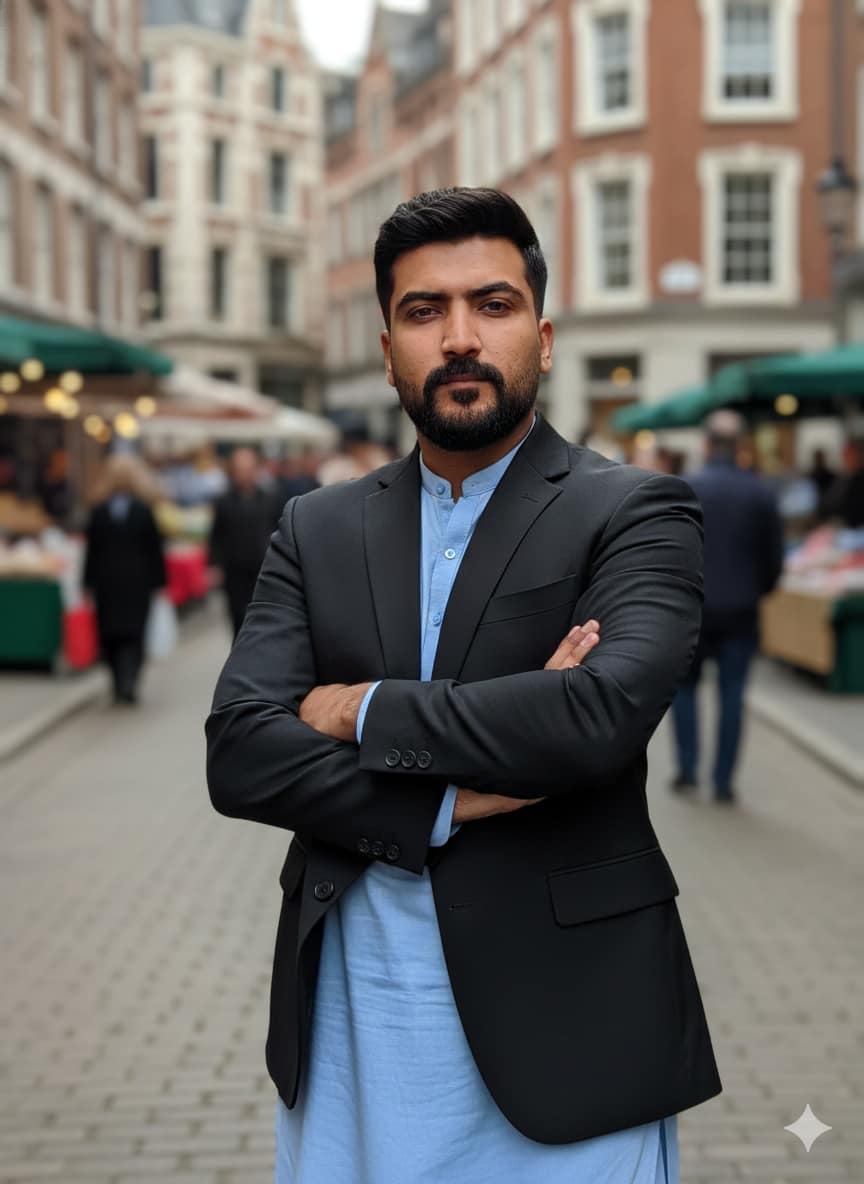
A striking half-body, ultra-realistic portrait (maintain reference face accuracy) of a stylish man in a tailored sky-blue cotton shalwar kameez, layered beneath a sleek charcoal black blazer. He is standing at ease in a bustling European market street, framed by blurred activity and vintage brickwork. Pose: Arms crossed or one hand subtly adjusting the blazer cuff, maintaining direct eye contact. Lighting: Bright, diffused urban daylight, sharp focus on fabric texture, high-contrast street photography aesthetic, 4K resolution.
Example 2
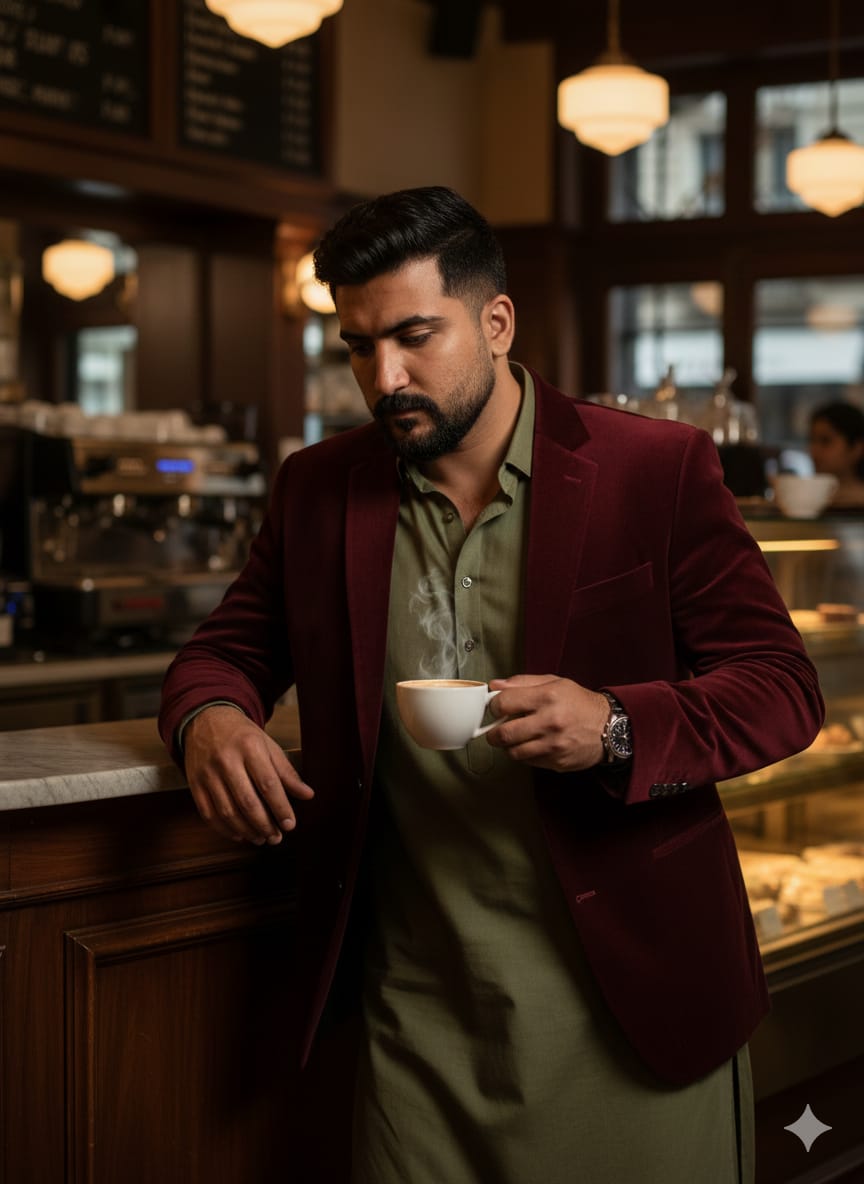
A captivating half-body portrait (exact face retention required) of a man dressed in a soft olive shalwar kameez and a dark ruby-red velvet blazer. He is positioned leaning effortlessly against a high, polished wooden counter inside a classic Parisian-style café. Pose involves one hand gripping the counter edge, the other gently holding a steaming coffee mug, eyes focused downward in thought. Warm ambient lighting, deep cinematic shadow play, shallow depth of field, fashion magazine aesthetic.
Example 3
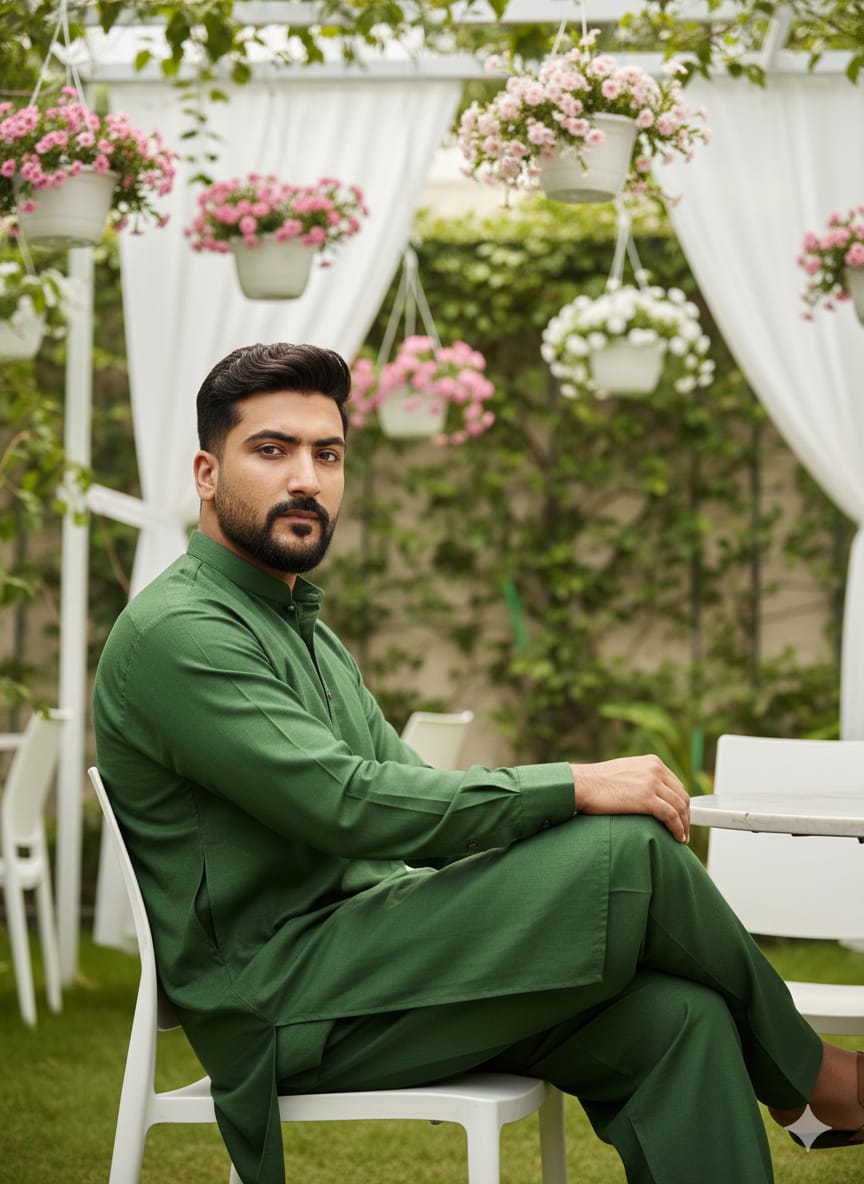
An 8K, high-fashion editorial portrait of the same young model with a flawlessly trimmed beard and modern wavy hair. He wears a meticulously designed mehndi colored slim-fit outfit. Pose: Sitting sideways on a minimalist white chair with crossed legs, gently turning his head to connect with the camera. Background: A serene outdoor garden café filled with hanging floral bouquets (pink/white), white gauzy curtains, and lush green foliage. Soft natural daylight, highly refined skin texture, realistic facial features.
Example 4
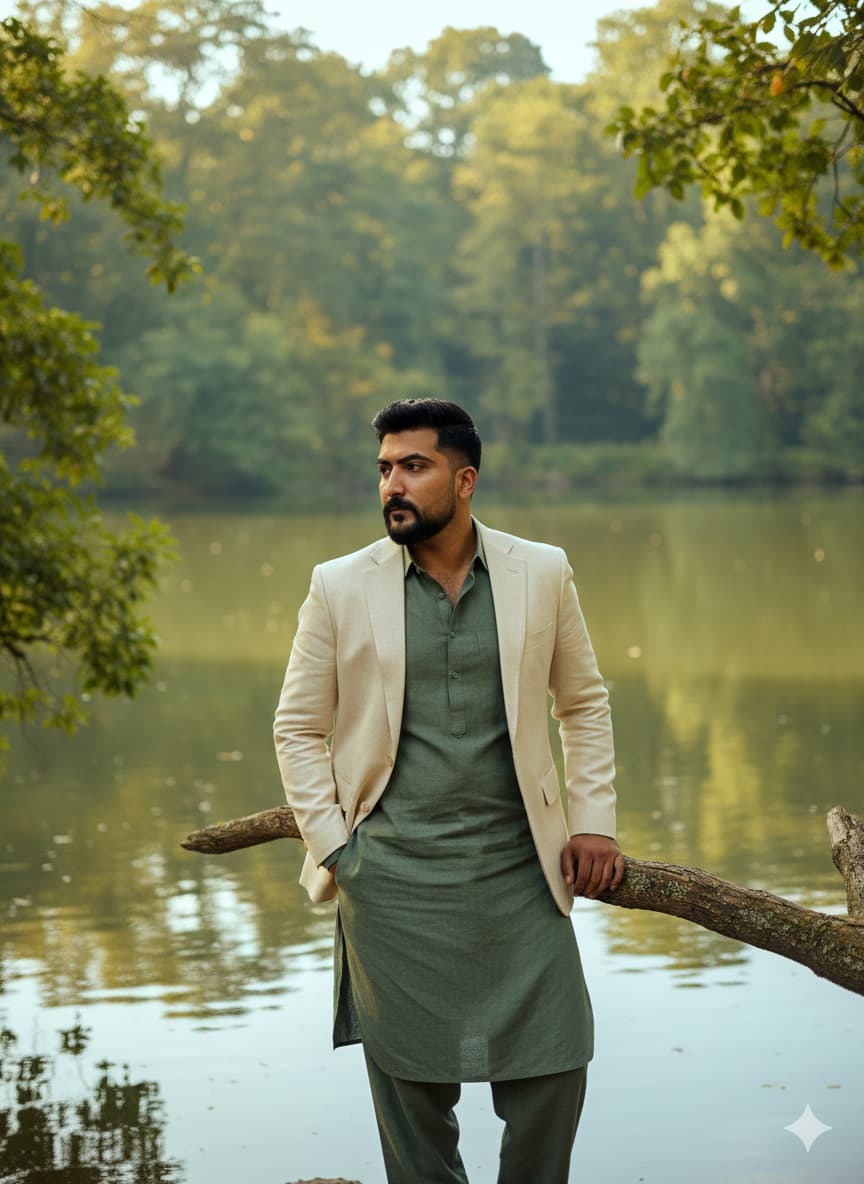
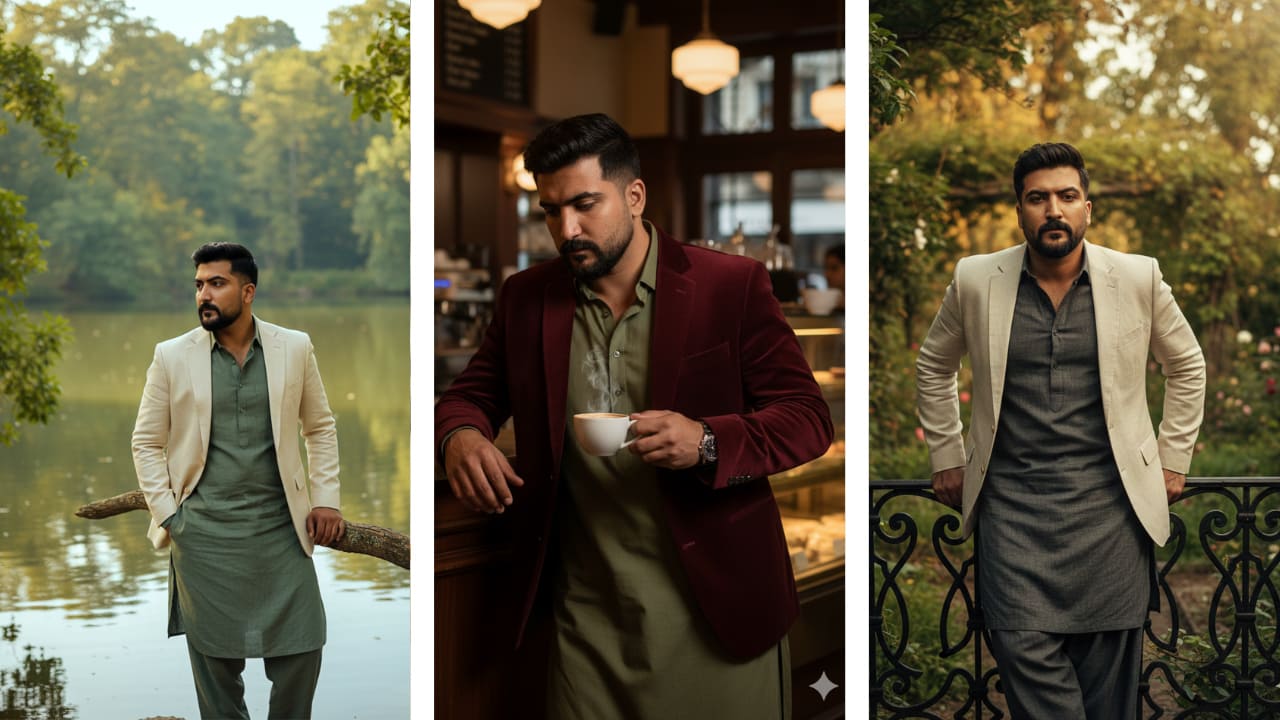
Stunning full-body fashion shot (match reference face perfectly) of a man in a muted forest-green shalwar ensemble layered with a crisp cream-colored linen blazer. He stands composed near a calm lakeside, where soft water reflections play behind him, framed by dense leafy trees. Pose is relaxed and contemplative, one hand casually in the trousers pocket, the other resting on a low tree branch. Soft focus sunlight with noticeable background bokeh, cinematic color grading, 4K.
Luxury & Night Vibe
Example 5
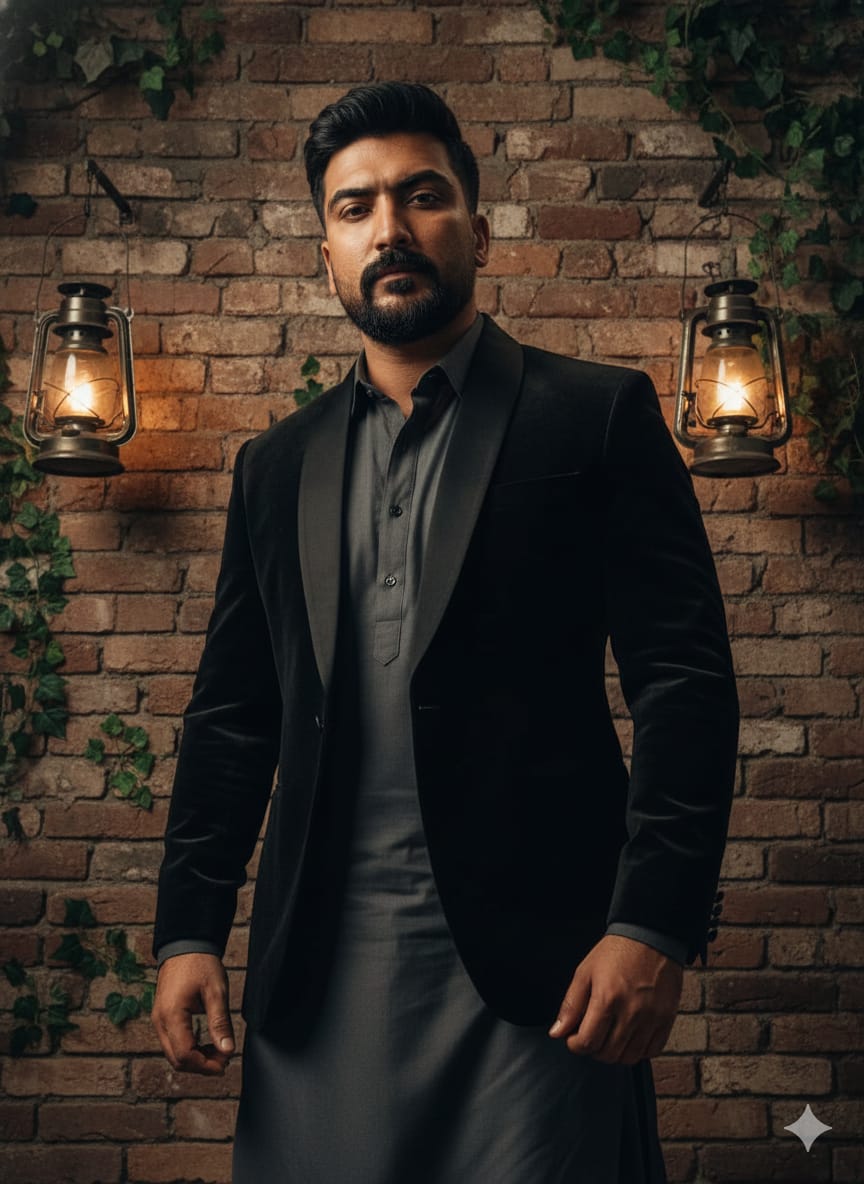
Highly stylized mid-shot portrait (guarantee reference face match) featuring a strong stance. The subject wears a luxurious charcoal shalwar kameez under a tailored black velvet jacket, positioned against an aged, textured brick wall illuminated by vintage-style lanterns. The illumination is ‘Golden Hour’ inspired, casting deep, warm shadows and high contrast on the facial contours. Low-angle framing emphasizes dominance. Editorial quality, dramatic depth of field, high-detail.
Example 6
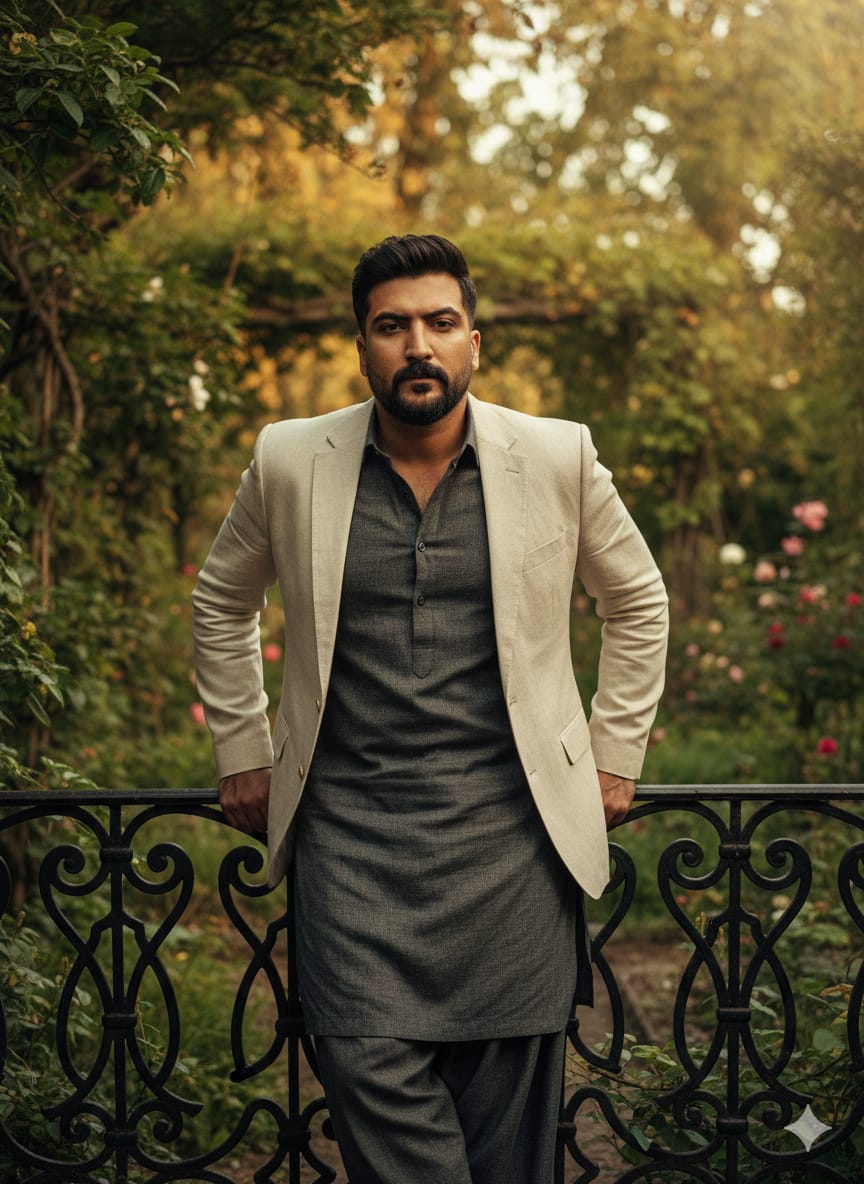
A powerful fusion fashion portrait. A self-assured man in a dark grey shalwar suit contrasted with a light bone-colored blazer. He leans comfortably on a black ornamental iron garden railing, surrounded by the lush, rustic greenery typical of European estates. Golden sunlight creates a moody atmospheric glow, highlighting the textile textures. Vertical magazine layout, realistic 4K cinematic tone.
Example 7
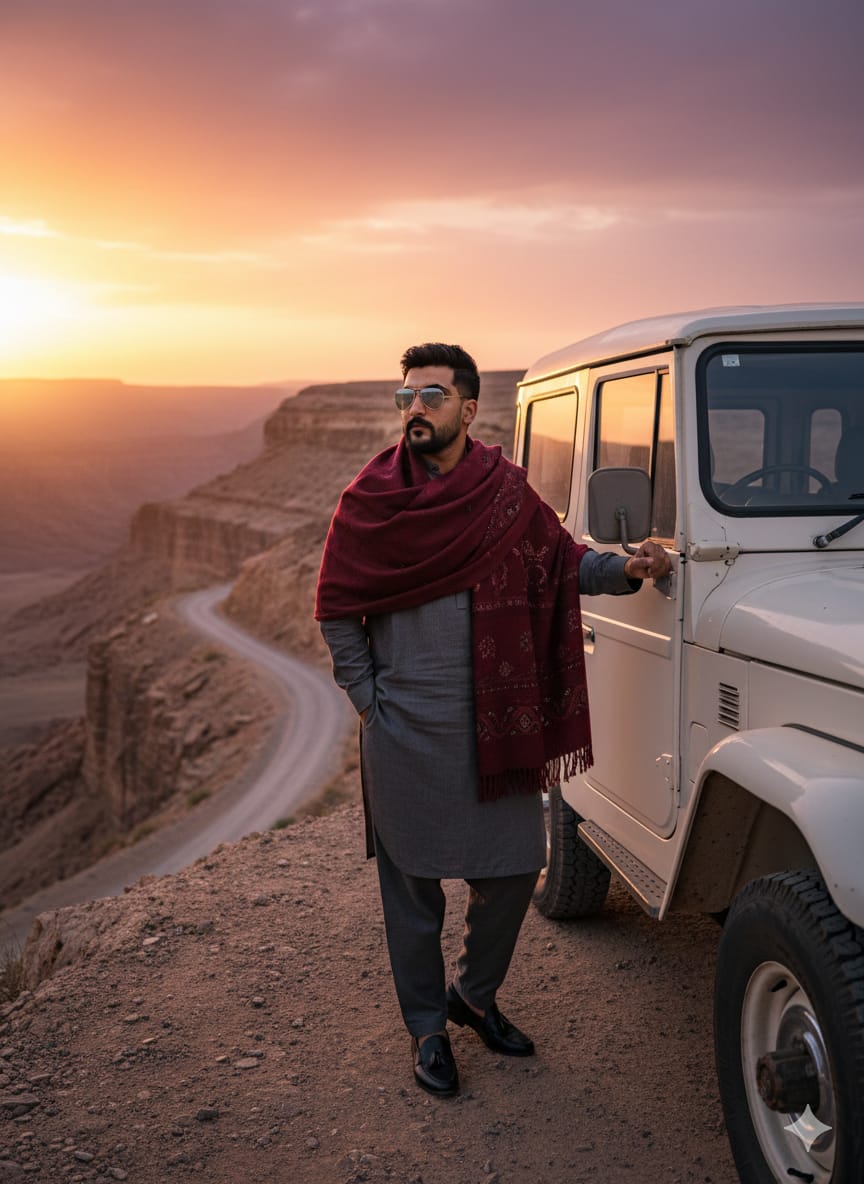
A cinematic ‘Desert Edge’ portrait. A 23-year-old confident man is standing next to a pearl-white vintage SUV (Land Cruiser style) on a dramatic cliffside road. He wears a charcoal shalwar kameez, accessorized with a deep patterned burgundy shawl and black loafers. Aviator glasses reflect the fiery orange twilight sky. Pose is casual, hand in pocket, gazing towards the horizon. Dust motes visible in the air, creating a luxury desert fashion editorial atmosphere. (8K HDR | Cinematic Quality | Cliffside Scene).
Example 8
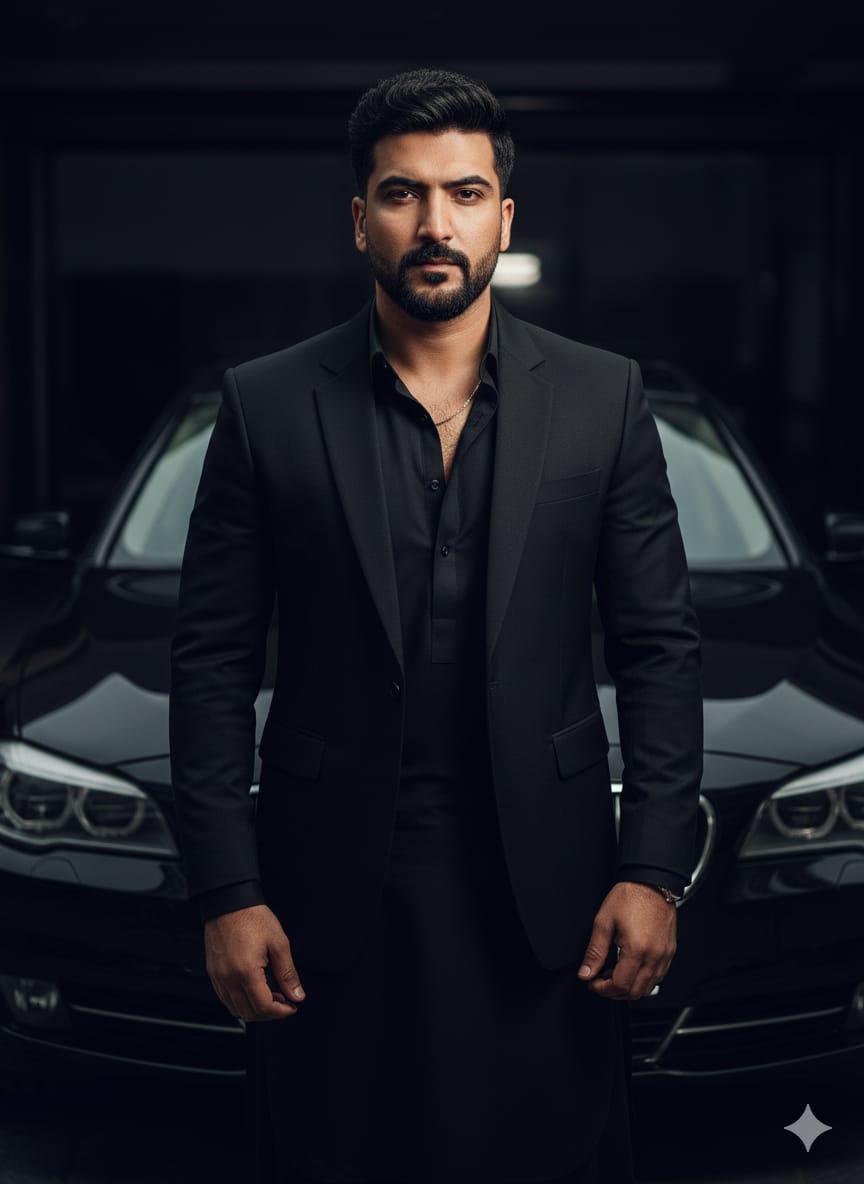
Hyper-detailed, stylized 4K portrait of the same sharp-featured model (flawless skin and face preservation required) in a perfectly fitted, minimalist all-black shalwar suit. The suit is subtly unbuttoned at the top to reveal a delicate gold chain. He stands confidently against a softly focused, luxury black sedan background (BMW style). Symmetrical composition, editorial lighting highlighting high contrast, 9:16 aspect ratio.
Festive & Elegant
Example 9
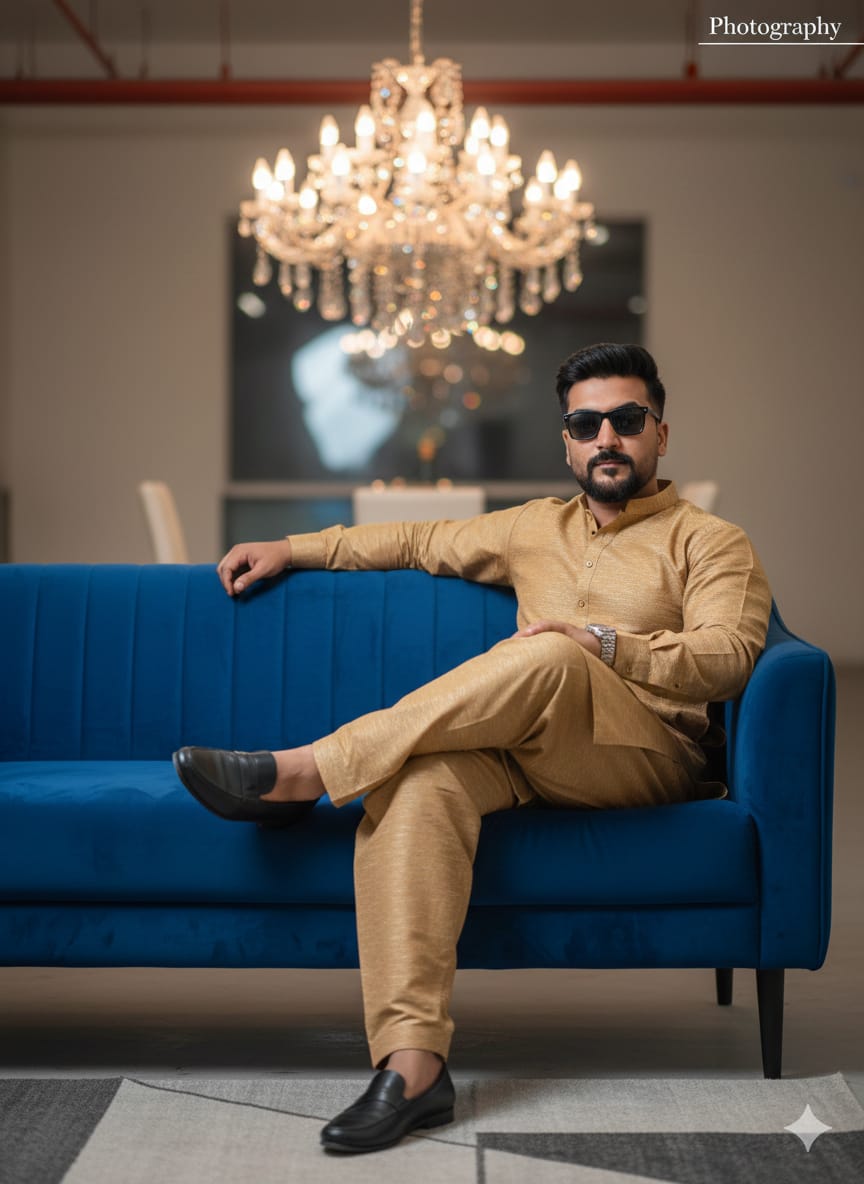
8K Ultra-realistic, high-fashion studio editorial. A young man (same reference face) is lounging casually on a rich sapphire blue velvet sofa within a high-end modern studio space. Outfit: A sophisticated golden-hued shalwar kameez paired with classic shoes and sleek black sunglasses. Soft ambient light, background featuring a blurred opulent chandelier glow. Incorporate a subtle, unobtrusive ‘Photography’ watermark in the upper right corner. Elegant and classy tone.
Example 10
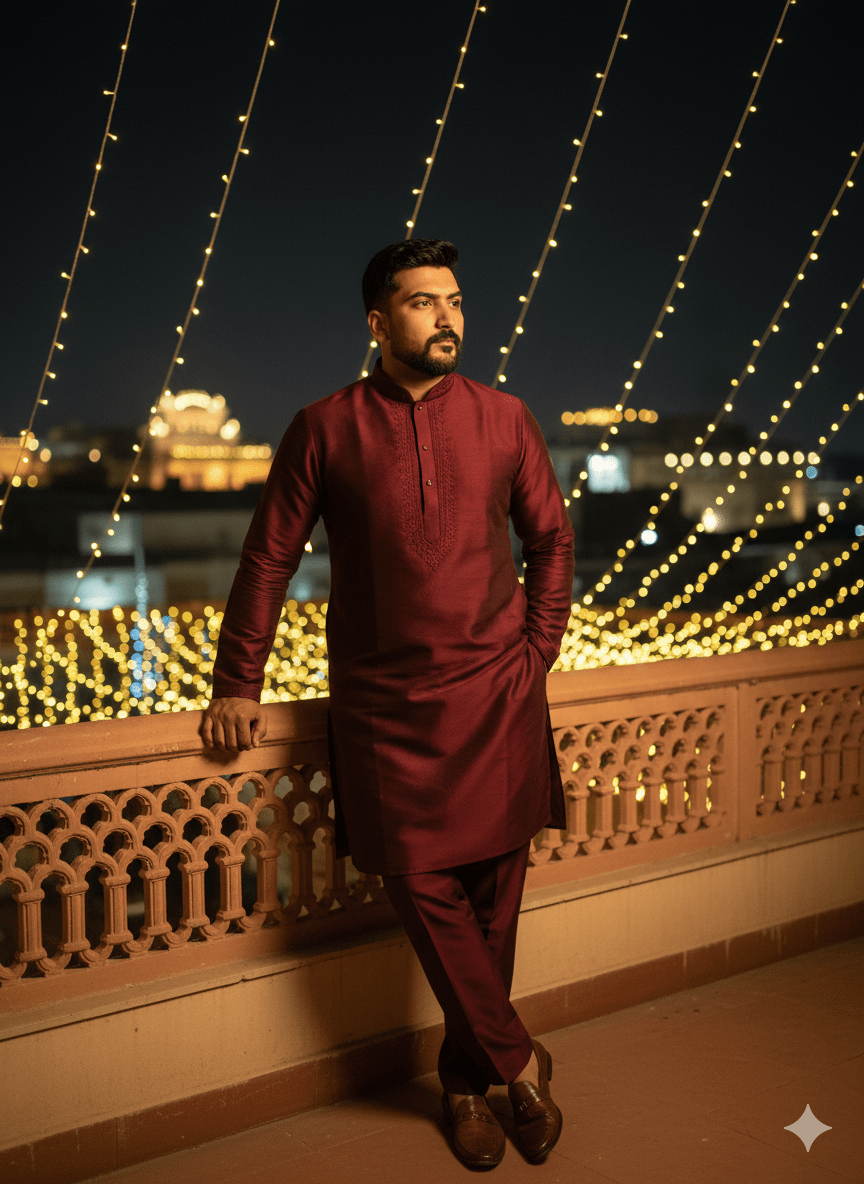
Hyper-realistic, full-body fashion portrait set at night. Confident and relaxed pose. Focus: Festive Rooftop Scene with Jaipur Vibes. The model wears a sophisticated deep maroon shalwar kameez with subtle embroidery detailing. Pose: Standing casually on the edge of a rooftop terrace. Background is softly blurred with warm, glowing string lights and city view. Face match is 100% accurate. Cinematic night setting.
Note: These examples illustrate structure, lighting control, and pose definition. The goal is consistency, not copying.
Common Mistakes That Break Realism
Avoid these issues when generating shalwar kameez portraits:
- Overloading prompts with unnecessary adjectives
- Changing clothing details mid-prompt
- Using poor-quality reference images
- Ignoring lighting direction
- Expecting identical results across different AI tools
Realism improves when prompts are clear, restrained, and structured.
Frequently Asked Questions (Q&A)
1. What makes Shalwar Kameez suitable for AI-generated portraits?
Shalwar kameez works well in AI portrait generation because of its balanced structure and clean lines. The outfit does not rely on complex cuts or excessive detailing, which allows AI models to render fabric folds, proportions, and drape more accurately. This makes the final image look natural instead of artificial.
2. Do I need very long prompts to get realistic Shalwar Kameez images?
No. Realism depends more on clarity than length. A well-structured prompt that clearly defines outfit, pose, lighting, and environment performs better than a long prompt filled with unnecessary words. Clear instructions help the AI focus on accuracy rather than guessing missing details.
3. Why do AI-generated faces sometimes look inconsistent?
Face inconsistency usually happens due to poor reference images or unclear instructions. If the reference image is blurry, angled, or heavily edited, the AI rebuilds the face instead of preserving it. Using a clean, front-facing reference image with neutral lighting significantly improves facial consistency.
4. Can the same prompt be reused with different reference images?
Yes. One of the advantages of structured photo prompts is reusability. When the outfit, pose, lighting, and environment are locked in the prompt, you can change only the reference image to generate multiple portraits with the same visual style while keeping facial identity accurate.
5. Which type of lighting works best for Shalwar Kameez AI portraits?
Soft natural lighting works best in most cases. Daylight, warm indoor lighting, or diffused evening light helps preserve realistic fabric texture and skin tone. Extremely harsh or dramatic lighting can distort clothing details and reduce realism, especially for traditional outfits.
6. Are Shalwar Kameez photo prompts safe to use on AdSense websites?
Yes. Educational content that explains how AI prompts work, how to avoid common mistakes, and how to achieve realistic results is considered safe. As long as prompts are shared as learning examples and the article focuses on guidance rather than automation abuse, the content remains suitable for monetization.
7. Why do results vary between different AI tools?
Each AI model interprets prompts differently. Some tools prioritize artistic style, while others focus on realism and structure. This is normal behavior. Testing the same prompt across different tools helps identify which platform best matches your desired output style.
8. How can I avoid unrealistic or exaggerated results?
Avoid over-styling, excessive fashion keywords, and extreme poses. Stick to natural environments, simple color palettes, and realistic posture. Clear instructions combined with a clean reference image produce the most authentic results.
Final Thoughts
Shalwar kameez photo prompts are not about tradition versus modernity. They are about structure, control, and realism. When prompts lock the scene and reference images define identity, AI tools can produce portraits that feel natural, confident, and professional.
This guide is designed to educate creators, not overwhelm them. By focusing on clarity instead of complexity, you can generate ultra-realistic AI portraits that stand the test of quality and consistency.
2 thoughts on “10 Best Shalwar Kameez Photo Prompts (2025) for Ultra-Realistic AI Portraits”
Comments are closed.