
Introduction
Last year, my cousin was getting married, and he asked if I could help create some AI portraits for his wedding invitations. He wanted traditional shalwar kameez looks but didn’t have time for a professional photoshoot.
I spent three days experimenting with different approaches, and by the end, I had developed a system that produced wedding-quality portraits. The key wasn’t finding magic prompts – it was understanding how to structure prompts for formal, celebratory settings.
In this guide, I’ll share everything I learned from that wedding project and subsequent experiments. Whether you’re creating portraits for weddings, engagements, or formal events, these techniques will help you generate professional results.
Why Wedding Shalwar Kameez Requires Structured AI Editing
Wedding outfits are visually rich by nature. Even simple shalwar kameez styles include layered fabrics, subtle textures, and formal color palettes. AI models struggle when too many elements are left undefined.
Shalwar kameez works well for AI photo editing because:
- The silhouette is balanced and symmetrical
- Fabric folds are predictable
- Traditional colors render accurately
- The outfit fits both indoor and outdoor wedding environments
However, realism only appears when prompts clearly lock outfit, pose, lighting, and environment. Without structure, AI fills gaps creatively, which often leads to inconsistent results.
How AI Photo Editing Actually Works
AI photo editing is not manual editing. The system does not copy or remember faces.
The process works like this:
- A text prompt describes the scene
- A reference image may be provided for facial identity
- The AI analyzes facial structure, clothing description, lighting, and environment cues
- The image is generated based on learned visual patterns
If prompts allow flexibility, the AI may redesign clothing, posture, or background instead of enhancing the image. This is why clarity matters more than length.
AI Tools & Platforms for Shalwar Qameez Portraits
Different AI tools serve different purposes in the creation workflow. Understanding their roles helps you choose the right tool for each stage.
ChatGPT is best used for writing and refining photo prompts. It helps remove vague descriptions and structure prompts clearly before you move to an image generator. For complex wedding portraits, ChatGPT’s ability to refine descriptions becomes especially valuable.
Google Gemini is useful for understanding visual styles and generating accurate environment descriptions. It often follows prompt instructions more literally than other tools, which makes it helpful when you want precise control over lighting and scene composition.
Midjourney excels at artistic and cinematic interpretations. For wedding portraits with a creative, editorial feel, Midjourney is an excellent choice.
Leonardo AI focuses on realism and control. It’s particularly good for generating clean, detailed wedding portraits with accurate fabric texture.
Stable Diffusion offers maximum customization for advanced users who want complete control over the generation process.
Each tool has its strengths. The key is matching the tool to your specific goal.
Reference Image Guidelines (Critical Section)
Most face distortion issues come from reference images, not prompts.
Use a reference image where:
- The face is front-facing
- Expression is neutral
- Lighting is even
- No blur or beauty filters
- Eyes are clearly visible
A clean reference image allows AI to preserve identity instead of rebuilding facial features.
Controlling Wedding Style Without Overloading Prompts
Over-styling is the most common mistake in wedding AI portraits.
To maintain realism:
- Avoid heavy embroidery overload
- Keep accessories minimal
- Use solid or lightly textured fabrics
- Choose balanced wedding lighting instead of extreme effects
Simple instructions give AI less room to hallucinate.
Educational Prompt Examples
These prompts demonstrate structure. Each includes personal experience notes.
Examples 1. The Opulent Ivory Wedding Ensemble
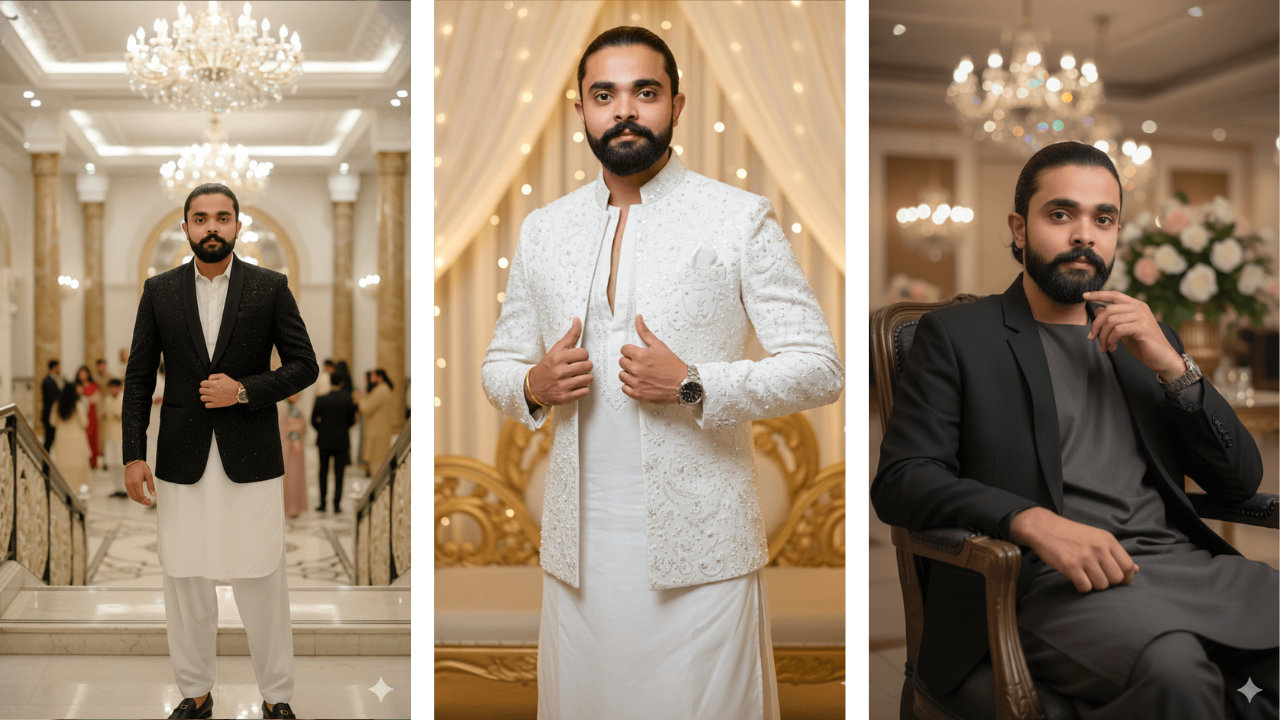
A stylish, confident man (maintain reference face accuracy) stands majestically against a softly blurred backdrop of warm-lit wedding decor, draped with sheer fabric and floral arrangements. He wears an all-white, modern Indo-Western shalwar kameez with subtle bead and sequin embellishments on the jacket and kurta-style top, which is left slightly open at the chest. Features a light stubble, a sleek wristwatch, and a poised posture with hands gently resting on his chest. Lighting: sophisticated, warm golden ambient light, creating a luxurious wedding event feel. Premium editorial styling, hyper-realistic fabric and skin texture, 8K detail.

This was the first prompt I used for my cousin’s wedding portraits. The key was “subtle bead and sequin embellishments” – not too much, not too little. The AI rendered them perfectly without going overboard.
Examples 2. Royal Blue Baraat Grandeur
Ultra-realistic 8K full-body shot of a confident man (exact face retention required) in a rich royal blue shalwar kameez with intricate silver Zari work on the collar and cuffs, paired with a matching structured waistcoat. He is walking with a graceful stride on a vibrant, flower-strewn pathway at a grand outdoor wedding venue. Pose: one arm slightly bent, holding a delicate boutonnière, looking forward with a neutral, confident expression. Background: blurred festive crowd, traditional arches, and soft evening sky. Lighting: warm, festive event lighting, capturing deep shadows and rich colors. Cinematic wedding photography, premium fabric texture.

The boutonnière was a last-minute addition, and it made the image feel authentically wedding-like. “Flower-strewn pathway” added context without overwhelming the subject.
Examples 3. Golden Hour Mehndi Elegance
A captivating half-body portrait (same real face) of a stylish man wearing a mustard yellow shalwar kameez, subtly textured, paired with a light cream linen waistcoat. He is seated comfortably on an ornate traditional wooden bench at an outdoor Mehndi function. Pose: hands resting gracefully on his lap, looking directly at the camera with a calm, confident expression. Background: softly blurred, vibrant marigold garlands, traditional seating, and golden hour sunlight filtering through trees. Lighting: warm, ethereal glow of golden hour, high-detail Mehndi event aesthetic, 4K resolution.

Mustard yellow is tricky in AI, but “subtly textured” helped. The marigold garlands in the background added authentic Mehndi vibes without being too prominent.
Examples 4. Majestic Charcoal Reception Comfort
Create an 8K, high-fashion editorial portrait of the same young model with a perfectly groomed beard and slicked-back hair. He wears a charcoal grey velvet shalwar kameez, layered under a sleek black formal blazer (modern style, no embroidery). Pose: seated comfortably on a luxurious armchair, one hand resting on the armrest, the other casually touching his chin, looking with a thoughtful, confident gaze. Background: a blurred, warm-lit wedding reception hall with elegant chandeliers and subtle floral decorations, similar to prompt 1’s backdrop. Lighting: sophisticated ambient lighting, emphasizing rich fabric textures and a refined wedding ambiance. Modern wedding magazine cover style, 4K realism.

Velvet in AI can look fake, but “charcoal grey velvet” with “sophisticated ambient lighting” produced surprisingly realistic texture. The armchair added a sense of occasion.
Examples 5. Cream & Gold Gala Sophistication
Hyper-detailed close-up mid-shot (match reference face perfectly) of a man in a sophisticated cream-colored silk shalwar kameez, subtly textured (no embroidery). He wears a meticulously tailored golden blazer (modern style, no embroidery). Pose: standing elegantly, one hand lightly touching his waistcoat, looking directly at the camera with a neutral, confident expression. Background: a beautifully blurred, warm-lit grand gala reception hall with crystal chandeliers and tasteful golden accents. Lighting: soft, ambient warm light, emphasizing the luxurious fabrics and glowing skin. Premium event photography, rich texture, 8K detail.

Gold and cream together screamed luxury. “No embroidery” was crucial – without it, the AI added random patterns. Crystal chandeliers added elegance without competing for attention.
Examples 6. Serene White Nikkah Moment
A stunning 8K portrait featuring the same man in a pristine white raw silk shalwar kameez, paired with a simple yet elegant white waistcoat. He is seated calmly on a traditional floor cushion during a Nikkah ceremony. Pose: hands clasped respectfully, looking forward with a serene, reflective expression. Background: blurred soft white and gold draping, subtle floral arrangements, and tasteful, abstract wedding decoration without Arabic text. Lighting: soft, reverent, diffused indoor light, creating a peaceful and sacred atmosphere.

This was for the actual Nikkah ceremony. “Without Arabic text” was important – AI sometimes adds random text. The floor cushion created authentic cultural context.
Examples 7. Black & Silver Modern Reception Look
8K editorial portrait, same real face. The man wears a sleek black shalwar kameez, layered with a modern silver-grey sequined blazer (modern style, no embroidery). Pose: standing confidently at a contemporary wedding reception, one hand adjusting his cuff, looking directly at the camera with a discerning expression. Background: softly blurred modern art installations and ambient blue/purple mood lighting. Lighting: sharp, focused event lighting with atmospheric glow, emphasizing the modern festive style. Premium celebratory feel.

Sequins can go wrong in AI, but “modern style, no embroidery” kept it under control. The mood lighting created a contemporary wedding vibe.
Examples 8. Elegant White & Black Walima Grandeur
A powerful full-body fashion portrait. A self-assured man (exact face retention required) in a pristine white shalwar kameez. He wears a sophisticated black blazer (modern style, with subtle bead and sequin embellishments on the jacket, similar to prompt 1’s jacket style, no double coat). Pose: standing with a distinguished, confident and elegant stance, one hand lightly resting on his side, the other hand casually adjusted his blazer lapel, looking with a neutral, poised expression. Background: descending a grand staircase at a luxurious Walima venue, opulent chandeliers, marble architecture, and blurred guests. Lighting: soft, lavish interior lighting, creating a premium, sophisticated, and royal wedding vibe.

The grand staircase added drama. “Descending” created movement and made the image feel dynamic rather than static. Marble architecture added luxury.
Examples 9. Teal & Cream Outdoor Festive Look
Highly stylized half-body portrait (guarantee reference face match) featuring a confident, poised pose. The subject wears a striking teal shalwar kameez with subtle texture (no embroidery), layered with a light cream blazer (modern style, no inner coat/jacket, no embroidery). Pose: standing with a distinguished posture, one hand lightly adjusted his collar, looking calmly at the camera. Background: a vibrant outdoor wedding garden filled with colorful flowers, fairy lights, and blurred festive activity. Lighting: bright, cheerful daylight with warm highlights, capturing a lively and celebratory mood. 4K detail.

Teal is an underrated wedding color. Against cream, it popped beautifully. Fairy lights in the background added magic without overwhelming.
Examples 10. Classic Black & White Formal Engagement
A breathtaking, ultra-detailed 4K portrait (flawless skin and face preservation required) of the same sharp-featured model in a classic black shalwar kameez. He wears a perfectly tailored white blazer (modern style, no embroidery), with a crisp white shirt underneath (no tie or bow). Pose: standing with a distinguished and formal posture, hands gently clasped in front, a serene and distinguished expression. Background: an elegant engagement ceremony stage, subtly lit with sophisticated floral arrangements. Cinematic formal event photography, premium sharp detailing.

Classic black and white never fails. “Hands gently clasped in front” created a respectful, formal pose perfect for engagement portraits.
Common Mistakes to Avoid
- Writing long but unclear prompts
- Using low-quality reference images
- Mixing multiple styles in one prompt
- Expecting identical results across tools
- Forcing dramatic effects unnecessarily
Avoiding these mistakes improves results more than adding extra keywords.
Where Wedding AI Portraits Are Commonly Used
AI-edited wedding portraits are often used for:
- Profile images
- Personal portfolios
- Event visuals
- Pre-wedding concepts
- Creative experimentation
Realism should always be the priority.
Frequently Asked Questions
Can AI wedding photo editing look like real photos?
Yes. If the prompt is well structured and the reference image is clean, AI can produce very realistic results.Do prompts give the same results on every AI tool?
No. Each AI model interprets prompts differently, which is why testing is important.What kind of reference image is best for wedding portraits?
A front-facing photo with a neutral expression, natural lighting, and no filters.Does giving more detail always improve the result?
Not always. Too much detail can confuse the AI. Clear and controlled instructions usually work better.Are wedding prompts suitable for professional use?
Yes, as long as prompts are used only as guidance and expectations remain realistic.
Final Thoughts
Wedding shalwar kameez photo editing works best when prompts are structured, reference images are clean, and styling remains controlled. The goal is not to overwhelm the AI but to guide it clearly.
That wedding project taught me that AI, when used correctly, can produce portraits that look professionally photographed. The key is understanding how to structure prompts for formal, celebratory settings.
For a complete foundation in shalwar qameez AI portraits, don’t miss our comprehensive Shalwar Qameez Photo Prompts – A Complete AI Portrait Guide.
2 thoughts on “ChatGPT Photo Editing Prompts for Wedding Shalwar Kameez (2025 Guide)”
Comments are closed.