Introduction
Reference-based AI photo editing is used when creators want visual consistency first and facial identity second. Unlike standard AI portrait generation, this approach focuses on keeping the outfit, pose, lighting, framing, and environment fixed, while allowing only the face to change through a reference image.
When I first discovered this technique, it was like finding a secret shortcut. Instead of struggling to recreate the same scene with different faces, I could lock everything else and just swap the face. But it took me months to figure out the right workflow.
Many creators using tools like ChatGPT image generation or Google Gemini notice an issue: instead of replacing only the face, the AI often alters clothing, posture, or background. This happens because the prompts are not structured to clearly lock visual elements.
This guide is written as an educational resource, not a prompt list. It explains how reference-based AI photo editing works, why visual drift occurs, and how properly written prompts help AI tools understand what must stay unchanged.
Understanding Reference-Based AI Photo Editing
In reference-based workflows, the AI treats the prompt as the scene blueprint and the reference image as the identity source. If the scene is not clearly defined, the AI attempts to rebuild the entire subject instead of replacing only the face.
This is why reference-based AI photo editing requires:
- Fixed clothing descriptions
- Locked poses and body positioning
- Clearly defined lighting and environment
- Explicit instructions limiting changes to facial identity only
Without these controls, even strong reference images fail to preserve consistency.
For a broader understanding of how prompts, tools, and reference images work together at a basic level, our Boys AI Photo Prompts: The Ultimate Guide is the perfect starting point before applying reference-based workflows.
Image Generation Process (How These Prompts Should Be Used)
Using reference-based AI photo editing prompts correctly matters more than the wording itself. At the moment, ChatGPT and Google Gemini are the most reliable tools that support this workflow.
Follow this controlled process:
- Select one prompt and keep it unchanged
- Upload a clean, front-facing reference image
- Avoid filters, sunglasses, or strong expressions in the reference
- Use the prompt together with the reference image
- Do not add extra clothing, pose, or lighting instructions
- Let the AI change only the facial identity
When used this way, the prompt controls the scene, and the reference image controls the face. This separation is the foundation of predictable, repeatable results.
Educational Prompt Examples (Reference-Based)
Important clarification
The prompts below are examples only.
They are included to demonstrate how visual elements are locked while facial identity is controlled through a reference image. These are not templates and should be adapted carefully.
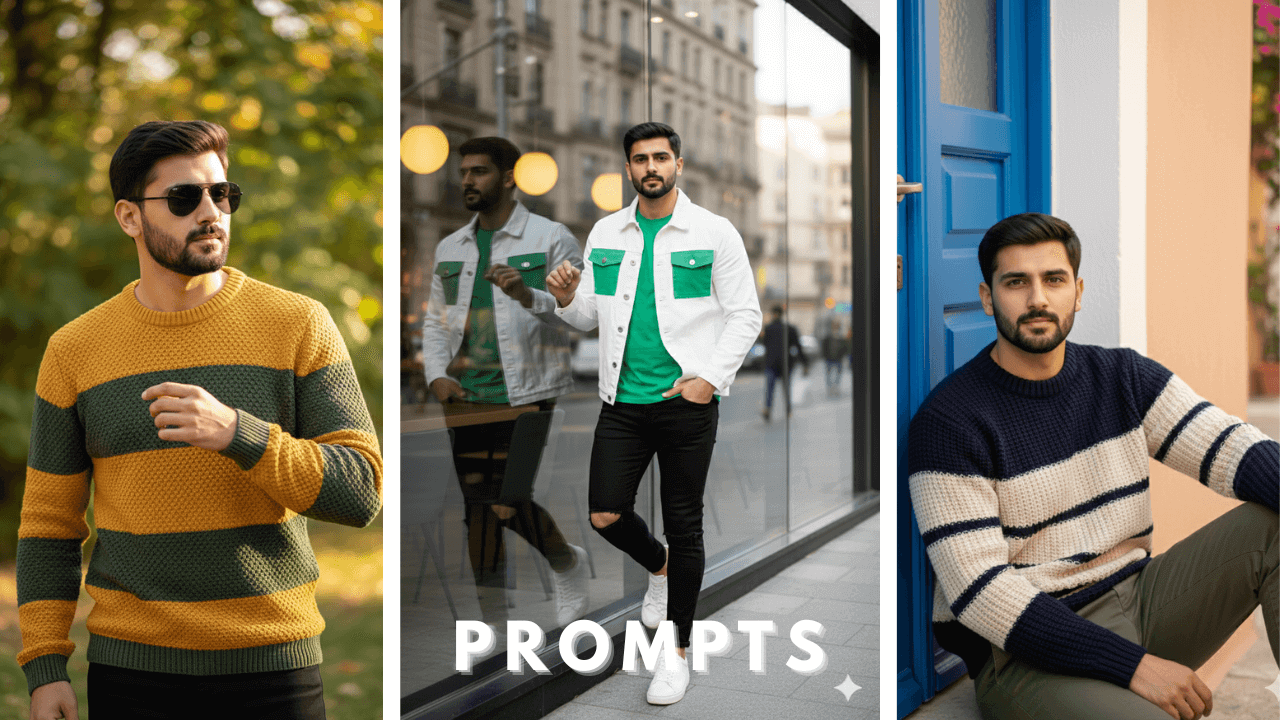
Prompt 1 – Smart Casual Business Walk
Ultra-realistic full-body photo of a stylish man wearing a maroon V-neck sweater over a white dress shirt, navy slim-fit trousers, and clean white sneakers. He is walking confidently on a modern corporate plaza with glass buildings in the background. Natural daylight, soft shadows, realistic skin texture, professional fashion photography, sharp focus, high detail. The face must match the provided reference image exactly while keeping outfit, pose, lighting, and background unchanged.

This was my first successful reference-based edit. The maroon sweater against glass buildings created a professional look. The face swapped perfectly while everything else stayed identical.
Prompt 2 – Urban Winter Street Style
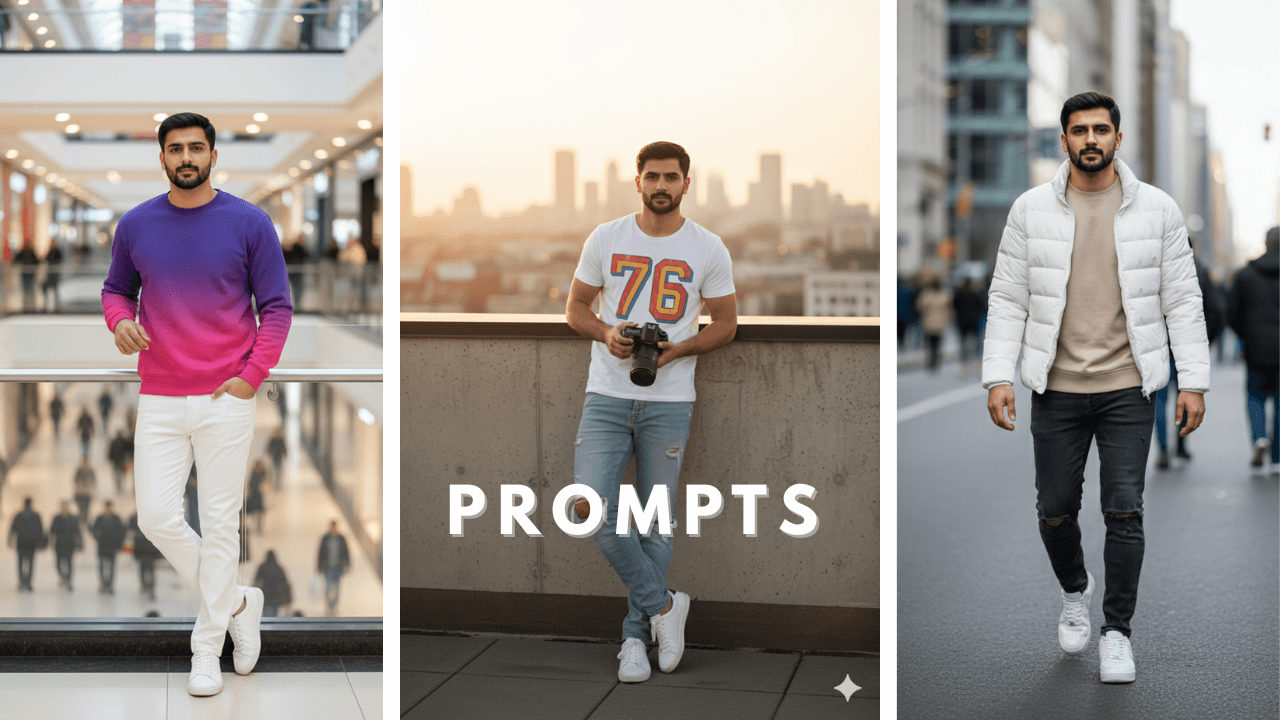
Ultra-realistic full-body photo of a man wearing a grey hoodie layered under a dark grey puffer jacket, matching jogger pants, and light grey sneakers. He is leaning against a metal railing on a rooftop with a blurred city skyline behind him. Overcast winter lighting, cool tones, cinematic realism, shallow depth of field. Facial features must match the reference image precisely while everything else remains identical.

Winter shots with puffer jackets are cozy. The rooftop city skyline added depth. Face swapping worked perfectly.
Prompt 3 – Luxury Blazer Look
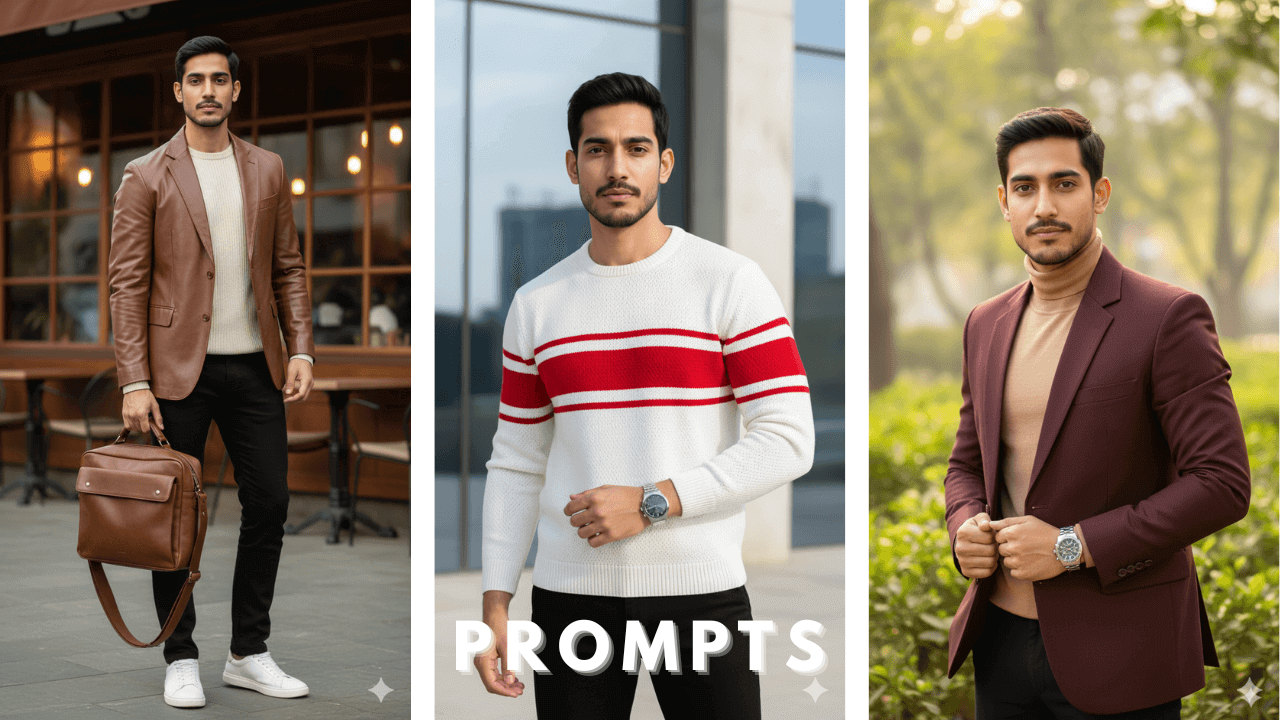
Ultra-realistic mid-to-full body photo of a man wearing a burgundy tailored blazer over a beige turtleneck sweater, dark trousers, and a luxury wristwatch. Outdoor setting with greenery and soft daylight. Editorial fashion photography style, clean background blur, high realism. Face must be replaced using the reference image without altering outfit, pose, or environment.

Burgundy blazer with turtleneck is very sophisticated. The outdoor greenery added freshness. The face swapped while everything else stayed locked.
Prompt 4 – Graphic Knit Casual Style
Ultra-realistic mid-body photo of a man wearing a white knit sweater with bold red stripe design, black trousers, and a wristwatch. Modern architectural background, balanced natural lighting, crisp details. Facial identity must follow the reference image while maintaining the same clothing, posture, and scene.

Graphic knit sweaters are trendy. The red stripe added visual interest. Face swapping was seamless.
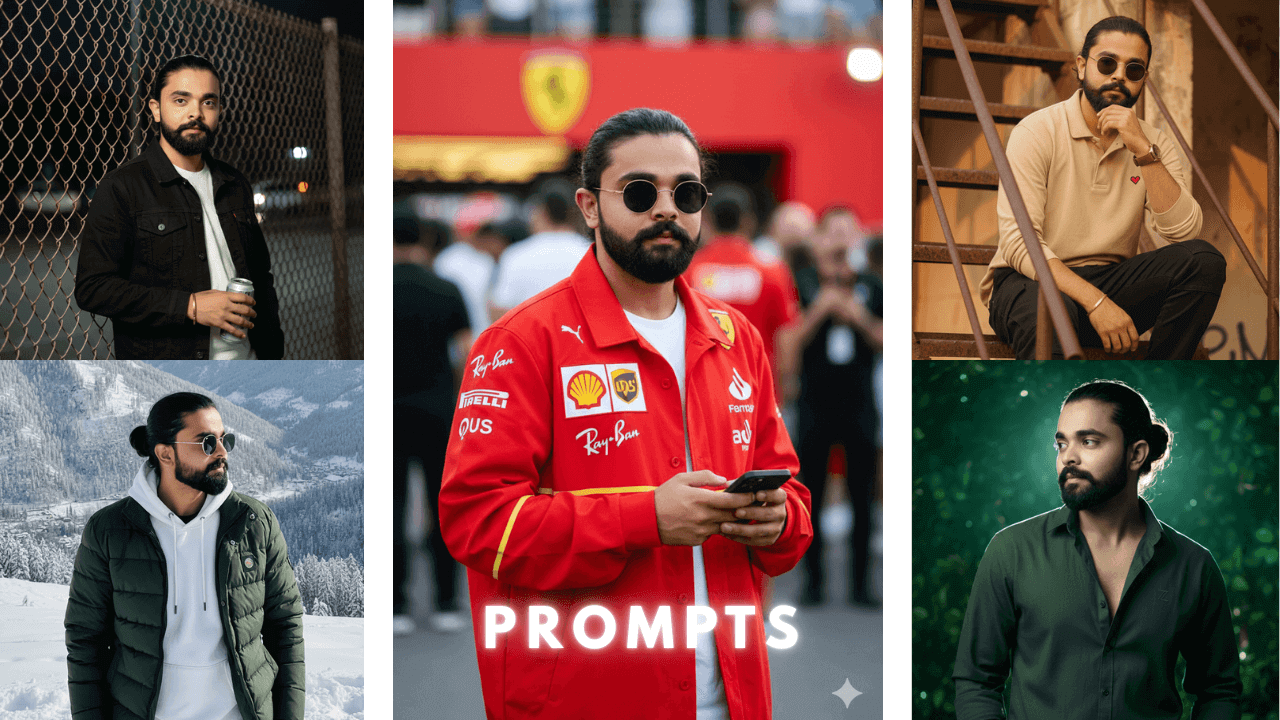
Prompt 5 – Black and White Denim Portrait
Ultra-realistic black-and-white photo of a man wearing a classic denim jacket over a plain t-shirt, casual trousers, and a wristwatch. Urban street background, strong contrast lighting, dramatic mood. Only the face should change based on the reference image; all other elements remain fixed.

Black and white hides nothing – but when it works, it’s stunning. The denim texture looked real even in monochrome. Face swap was perfect.
Prompt 6 – Minimal Street Bomber Look
Ultra-realistic mid-body photo of a man wearing a navy bomber jacket over a black t-shirt and dark trousers. Neutral outdoor background, soft daylight, clean composition. The face must match the reference image exactly with no changes to clothing or pose.

Simple and effective. The navy bomber jacket is a classic. Face swap worked perfectly.
Prompt 7 – Winter Shearling Jacket Scene
Ultra-realistic photo of a man wearing a red shearling jacket over a grey knit sweater, dark trousers, and winter setting with soft snowfall and warm lights in the background. Cinematic winter atmosphere, shallow depth of field. Face replaced using reference image only.

Red shearling jacket is bold and beautiful. The snowfall added winter magic. Face swap was seamless.
Prompt 8 – Smart Casual Café Outfit
Ultra-realistic full-body photo of a man wearing a brown leather blazer over a cream sweater, slim trousers, white sneakers, holding a leather bag. Café exterior setting with warm natural lighting. Editorial realism. Facial identity must follow the reference image without altering styling.

Café shots are always popular. The leather bag added a lifestyle touch. Face swapped perfectly.
Prompt 9 – Classic Wool Coat City Look
Ultra-realistic full-body photo of a man wearing a camel wool coat over a dark sweater and beige trousers, standing on a city street. Overcast daylight, European fashion style, sharp focus. The face must be replaced from the reference image only.

Camel wool coats are timeless. The European city street added sophistication. Face swap was perfect.
Prompt 10 – Autumn Knit and Scarf Style
Ultra-realistic full-body photo of a man wearing a beige cable-knit sweater, plaid scarf, tailored trousers, and leather shoes. Autumn park setting with golden leaves, warm lighting, realistic textures. Only facial features change according to the reference image.

Autumn is my favorite season for portraits. The plaid scarf added pattern and color. Face swap worked beautifully.
Why Reference-Based Prompts Prevent Visual Drift
Face drift usually happens when prompts leave room for interpretation. If clothing, pose, or lighting is flexible, the AI rebuilds the subject instead of replacing the face.
Reference-based AI photo editing prompts avoid this by:
- Fixing visual elements in advance
- Removing optional styling language
- Forcing the AI to respect the original scene
This makes the output more stable across multiple generations.
Safe Reuse Guidelines (Educational Best Practices)
To reuse reference-based prompts correctly:
- Use one reference image per generation
- Keep expressions neutral
- Avoid editing prompt wording
- Change only the reference image
These practices allow repeated use without breaking visual consistency.
Common Mistakes to Avoid
- Mixing multiple prompts together
- Adding beauty or face-rating words
- Using filtered or angled reference images
- Manually changing lighting or pose
Avoiding these mistakes keeps the AI focused on facial replacement only.
Conclusion
Reference-based AI photo editing is not about stronger prompts. It is about clear visual control and disciplined workflow. When prompts lock the scene and reference images define identity, AI tools like ChatGPT and Google Gemini can produce reliable, repeatable results.
Thank you!