
Introduction
When my niece asked for those university portfolio images, she specifically wanted portraits that reflected her identity – modest clothing, natural settings, nothing exaggerated. That’s when I realized that standard girls photo prompts weren’t enough. I needed prompts that understood cultural context.
This guide shares what I learned from that experience and subsequent testing. Whether you’re creating portraits for personal use, family, or clients, these techniques will help you generate Muslim girl AI portraits that are respectful, realistic, and culturally accurate.
For a complete foundation in girls photo prompts, including universal principles that work across all styles, check out our comprehensive Girls Photo Prompts – A Complete Guide for Realistic AI Portrait Creation .
Understanding Modest Fashion in AI Image Generation
Modest fashion works especially well in AI-generated portraits because it relies on balance rather than exaggeration. When prompts clearly describe clothing coverage, posture, and environment, AI models are less likely to introduce unrealistic or inappropriate elements.
Early versions of my prompts for my niece kept adding trendy, revealing elements because I hadn’t specified “modest” or “covered.” Once I added those keywords, the results matched her actual style perfectly.
Key Principles That Support Modest Fashion:
✅ Clearly defined clothing layers
✅ Natural fabric descriptions
✅ Neutral, everyday poses
✅ Calm facial expressions
✅ Environments that match daily life
When these elements are aligned, AI tools focus on realism instead of visual distortion.
How AI Generates Realistic Portraits
AI image generation doesn’t edit photos in the traditional sense. Instead, it creates new visuals based on probability and learned patterns. This means clarity and structure in prompts matter far more than length or decorative wording.
The Typical Workflow:
- A text prompt describes the subject, clothing, pose, and environment
- A reference image may be used to guide facial identity
- The AI analyzes visual cues such as face structure, outfit description, lighting, and background
- A new image is generated based on similarity, not copying
This is why two different people using the same prompt can get completely different results. The AI isn’t copying – it’s predicting. When I understood this, I stopped being frustrated by variations and started working with them.
Role of AI Tools in the Workflow
Different AI tools play different roles in the creation process.
ChatGPT
Best used for writing and refining prompts, removing ambiguity from descriptions, and structuring instructions clearly. It helps define what the image should look like.
Google Gemini
Useful for interpreting visual styles, generating environments and lighting ideas, and following structured prompts more literally. It performs best when prompts are clear and not overloaded.
Image Generation Platforms
Once prompts are finalized, they’re typically used in platforms like Midjourney, Stable Diffusion, and Leonardo AI. Each platform interprets prompts differently, so testing is important.
Reference Image Guidelines (Most Important Section)
Most realism issues come from poor reference images, not bad prompts.
Best Practices:
✅ Face should be front-facing – not angled away
✅ Expression should be neutral – no extreme smiles
✅ Lighting should be even and natural – no harsh shadows
✅ No heavy filters or blur – natural is better
✅ Eyes visible and facing the camera – helps AI lock facial structure
My Experience: When I finally got consistent results for my niece, it wasn’t because I found better prompts. It was because I fixed her reference image – front-facing, neutral expression, good lighting.
A clean reference image allows the AI to preserve facial identity instead of rebuilding it.
Environment Selection for Natural Results
Everyday environments help AI generate believable images. Overly stylized backgrounds often reduce realism.
Recommended Settings:
✅ Home interiors
✅ Gardens and balconies
✅ Quiet streets
✅ Parks and markets
✅ Simple event spaces
These environments support natural lighting and balanced compositions.
Prompt Examples
Example 1. Home Garden Serenity
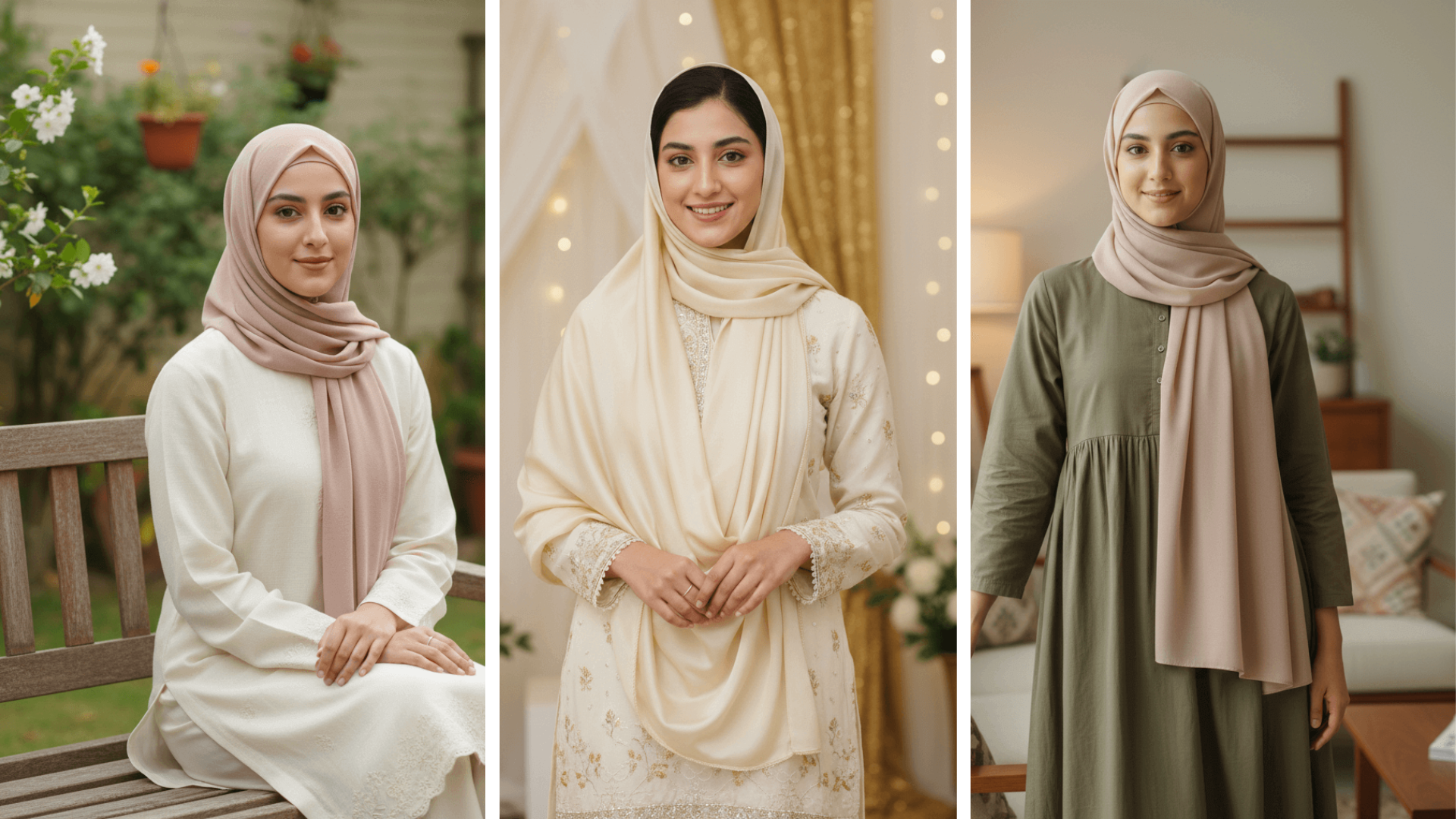
A young Muslim woman (maintain reference face accuracy) sitting peacefully on a garden bench in a cozy backyard. She wears a simple, light cotton shalwar kameez, with a matching dopatta casually draped over her head and shoulders. Pose: hands resting on her lap, looking calmly towards the camera with a gentle smile. Background: a blurred, natural home garden with green plants and a few blooming flowers, typical of a Pakistani/Indian home. Lighting: soft, natural daylight, giving a warm, unedited feel. Ultra-realistic, candid photo –ar 9:16

This was the first prompt that worked for my niece. The key was “casually draped” – not too formal, not too loose. The garden setting felt like home, not a studio.
Example 2. Family Lounge Comfort
A young Muslim woman (exact face retention required) standing casually in a comfortable living room/lounge. She wears a relaxed-fit frock in a muted color, with a soft dopatta draped over her shoulders. Pose: one hand lightly touching a piece of furniture (e.g., a sofa back), looking directly at the camera with a friendly, confident expression. Background: a typical home lounge setting with simple furniture, cushions, and warm indoor lighting. Lighting: soft, natural indoor light, creating an inviting and real atmosphere. Candid, everyday moment, 4K resolution –ar 9:16

“One hand lightly touching furniture” created a natural, relaxed pose. The muted color kept it elegant. Indoor lighting made it feel like a real home.
Example 3. Park Bench Read
A young Muslim woman (same real face) sitting on a wooden park bench, engrossed in reading a book. She wears a modest printed shalwar kameez, with a lightweight dopatta covering her head and chest. Pose: relaxed, head slightly tilted, eyes on the book. Background: a slightly blurred public park scene with green trees, grass, and a few distant people. Lighting: bright, clear daylight, making the scene look like a snapshot from a real day out. Realistic, untouched photography –ar 9:16

“Engrossed in reading” created a natural, candid feel. The book added purpose. Blurred people in background added life without distraction.
Example 4. Simple Wedding Corner
A young Muslim woman (maintain reference face accuracy) standing in a brightly lit corner of a simple wedding event hall. She wears a beautifully but not overly embellished shalwar kameez, with a matching dopatta gracefully styled. Pose: standing upright, hands gently clasped, a slight, happy smile. Background: softly blurred, basic wedding decorations with drapes and simple floral accents, typical of a family gathering. Lighting: warm, clear event lighting, making it feel like a real wedding photo. Unedited, natural event photography –ar 9 16

“Not overly embellished” was key – kept it real. The simple wedding hall felt authentic. Hands gently clasped created a respectful, elegant pose.
Example 5. Morning Kitchen Tasks
A young Muslim woman (exact face retention required) standing by a kitchen counter, casually engaged in a simple task like arranging fruits. She wears a comfortable, plain shalwar kameez, with her dopatta loosely draped over her head. Pose: natural, looking down at her hands, a relaxed expression. Background: a clean, functional home kitchen with standard appliances. Lighting: bright, even morning light from a window, making the scene feel authentic and unposed. Realistic, documentary style –ar 9:16

Kitchen scenes feel incredibly real. “Arranging fruits” was specific enough to guide the AI without overcomplicating. Morning light from a window created beautiful natural lighting.
Example 6. Rooftop View at Dusk
A young Muslim woman (same real face) standing on a simple rooftop in the early evening. She wears a modest frock, with her dopatta covering her head, gently flowing in the light breeze. Pose: looking out at the distant houses and a soft evening sky, hands casually at her sides. Background: blurred residential rooftops, simple buildings, and a warm, fading sunset sky. Lighting: soft, atmospheric dusk light, creating a calm and real-life evening scene. Natural light photography –ar 9:16

Rooftop scenes are universally relatable. “Gently flowing in the light breeze” added life without complexity. The fading sunset sky created a beautiful, natural backdrop.
Example 7. Casual Street Stroll
A young Muslim woman (maintain reference face accuracy) walking on a quiet residential street. She wears a casual shalwar kameez, with a light dopatta draped over her head and shoulders. Pose: natural stride, looking forward, a neutral, relaxed expression. Background: blurred, everyday street scene with houses, trees, and a clear sky. Lighting: bright, even daylight, like a quick snapshot from a walk. Unposed, genuine street photography –ar 9:16

Street scenes add authenticity. “Natural stride” prevented a stiff, posed look. Bright daylight kept everything clear and real.
Example 8. Home Study Focus
A young Muslim woman (exact face retention required) sitting at a wooden study desk in her room, focused on a laptop. She wears a comfortable shalwar kameez, with her dopatta draped over the chair back (not on head in this functional pose). Pose: leaning slightly forward, hands on the keyboard, concentrated expression. Background: blurred, simple bedroom decor with a bookshelf or a wall. Lighting: soft, consistent indoor light, ideal for a study environment. Authentic, personal moment –ar 9:16

Study scenes are incredibly relatable. “Dopatta draped over chair back” was a realistic detail – sometimes we remove it while working. The laptop added modern context.
Example 9. Market Visit Candid
A young Muslim woman (same real face) standing in a bustling local market, holding a small shopping bag. She wears a practical and simple shalwar kameez, with a colorful dopatta draped over her head. Pose: looking towards something off-frame with a slightly curious expression, hands holding the bag. Background: blurred market stalls, people, and everyday activity. Lighting: bright, natural outdoor market light, capturing the vibrant reality of a local market. Candid, busy scene –ar 9:16

Markets are full of life. “Looking towards something off-frame” created a candid, unstaged feel. The shopping bag added purpose and realism.
Example 10. Balcony Morning Freshness
A young Muslim woman (maintain reference face accuracy) standing on a home balcony in the morning. She wears a light, breathable frock, with her dopatta casually draped over her head. Pose: one hand lightly on the railing, looking up at the sky with a refreshed, peaceful expression. Background: blurred residential view (e.g., trees, other buildings), and a clear, bright morning sky. Lighting: soft, fresh morning light, creating a serene and gentle atmosphere. Real-life, quiet moment –ar 9:16

Balcony scenes feel personal and real. “Looking up at the sky” created a hopeful, peaceful mood. Morning light kept everything soft and fresh.
Common Mistakes to Avoid
❌ Writing vague prompts
❌ Using low-quality reference images
❌ Mixing too many styles in one prompt
❌ Overusing cinematic keywords
❌ Ignoring environment realism
Avoiding these mistakes improves results more than adding extra words.
Where These Images Are Commonly Used
AI-generated modest portraits are often used for:
- Profile images
- Blog visuals
- Educational content
- Fashion inspiration boards
- Creative testing
Use cases may vary, but realism should always come first.
Frequently Asked Questions
What makes Muslim girl AI photo prompts different from general AI prompts?
Muslim girl AI photo prompts focus on modesty, cultural accuracy, and realism. Unlike general prompts that may allow creative exaggeration, these prompts clearly define clothing coverage, natural poses, and respectful environments so the AI produces balanced and appropriate results.
Why is reference image quality important for realistic AI portraits?
AI models don’t remember faces. They analyze visual structure. A clear, front-facing reference image with natural lighting helps the AI preserve facial identity instead of rebuilding or distorting it. Most realism issues come from poor reference images, not weak prompts.
Can these prompts be used with different AI tools?
Yes. The prompt structure explained in this guide works across multiple platforms. However, each AI tool interprets prompts differently, which is why testing and small adjustments are important for consistent results.
How can creators ensure cultural sensitivity in AI-generated images?
Cultural sensitivity is maintained by:
- Using modest clothing descriptions
- Avoiding exaggerated fashion terms
- Selecting realistic everyday environments
- Keeping facial expressions natural
Clear instructions help AI models stay within respectful and realistic boundaries.
Final Thoughts
That university portfolio project taught me something valuable: Muslim girl AI portraits aren’t about finding exotic keywords. They’re about respect, clarity, and understanding what makes a portrait feel authentic.
Today, I can generate portraits that reflect my niece’s identity perfectly. Not because I have secret techniques, but because I learned to specify the details that matter – modest clothing, natural settings, calm expressions – and let the AI do the rest.
6 thoughts on “Muslim Girl AI Photo Prompts: A Practical & Educational Guide (2025)”
Comments are closed.